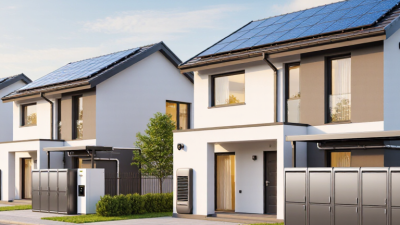
A home battery can keep the refrigerator humming, lights on, and essential devices charged when the grid fails. But the best Home Battery Storage system in 2026 will not be the same for every household. Your solar production, evening use, outage risk, local electricity rates, and installation costs all matter. So does the battery’s usable capacity, continuous power output, warranty, and ability to work with your inverter.
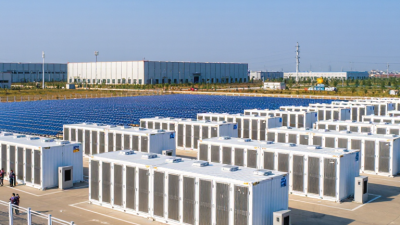
The International Energy Agency’s 2024 report, Batteries and Secure Energy Transitions, says global energy-storage capacity must grow sixfold by 2030 in its net-zero pathway, reaching 1,200 gigawatts. That figure covers grid-scale storage too; it is not a forecast for home batteries. Still, it signals the growing importance of flexible storage. IEA Executive Director Fatih Birol has described batteries as “the key to unlocking the full potential of renewable energy.” The practical test at home is less grand: can the system reliably cover your evening load, and for how long?
This guide compares leading options by usable energy, power, round-trip efficiency, warranty, safety features, and installed cost. It also considers backup performance and software limits that are easy to miss in a sales brochure. A large battery may look reassuring. It can still be a poor fit if it rarely fills or cannot power your critical circuits. Real household usage varies, and published specifications do not tell the whole story. That deserves a closer look.
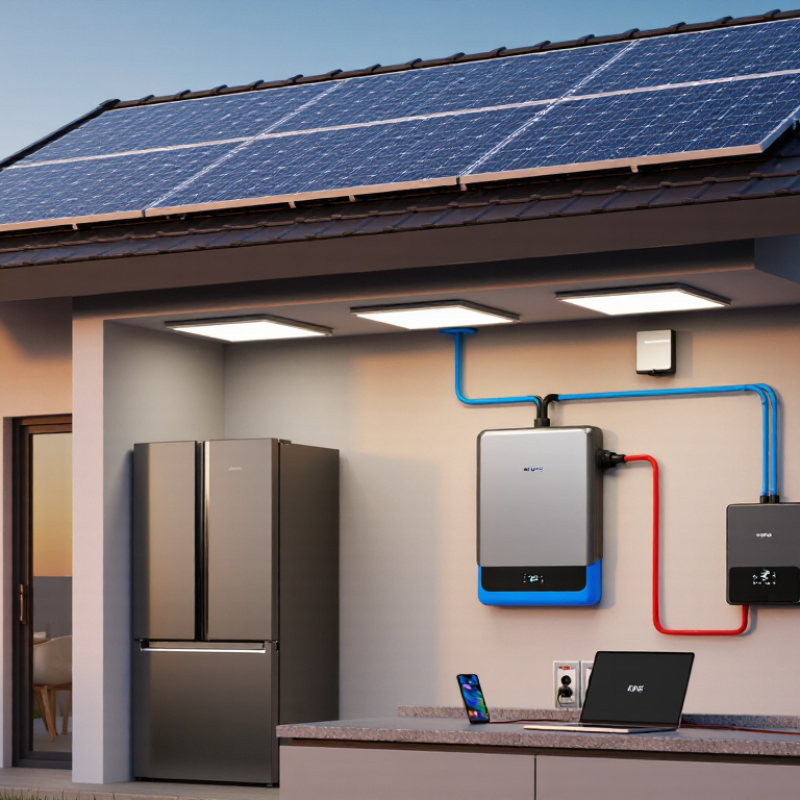
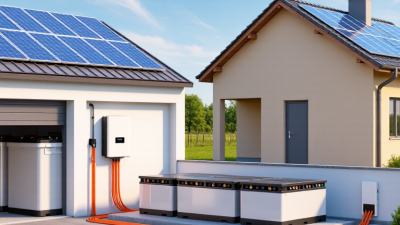
A home battery stores electricity for later use; it does not generate power. Solar panels produce direct current (DC), while most household appliances use alternating current (AC). An inverter converts between the two, and a control system directs energy where it is needed. Simple on paper. During daylight, solar power can run appliances and charge the battery with surplus energy. After sunset, stored energy can supply selected circuits.
When the grid fails, a properly configured system disconnects from it before providing backup power. This protects utility workers and allows the home system to operate independently. Not every battery can power an entire house. An installer may connect essential circuits, such as a refrigerator, modem, and several lights. Electric heating or cooking can drain stored energy much faster. Battery capacity, measured in kilowatt-hours, indicates how much energy it can store; power output affects how many appliances can run at once.
Some systems connect to solar panels before the inverter, while others connect after it. The design affects conversion steps and how easily a battery can be added to an existing solar setup. Energy controls may prioritize household use, battery charging, or grid electricity, depending on settings and conditions. Real usage rarely matches a neat diagram. Reviewing past electricity bills and outage needs helps estimate a practical battery size, though future habits can still surprise you.
| System Type | How It Works | Typical Usable Capacity | Typical Continuous Power | Typical Round-Trip Efficiency | Best Suited To | Key Consideration |
|---|---|---|---|---|---|---|
| AC-coupled battery system | A battery inverter converts the battery’s DC electricity to AC for household use. With solar panels, power may be converted from solar DC to AC and back to battery DC when stored. | About 5–20 kWh per system; additional modules can increase capacity if supported. | About 3–11 kW, depending on the inverter and configuration. | About 85–90% for a solar-to-battery-to-home cycle. | Homes adding a battery to an existing solar installation. | Extra power conversions can reduce efficiency slightly. Backup operation may require a separate transfer device and selected-load circuits. |
| DC-coupled battery system | Solar panels and the battery connect on the DC side of a compatible inverter. The system converts electricity to AC for household loads when needed. | About 5–20 kWh per system; capacity depends on the battery modules and inverter. | About 3–11 kW, depending on the inverter and system design. | About 90–95% for a solar-to-battery-to-home cycle. | New solar-and-battery installations designed together. | Can reduce conversion losses, but compatibility and system design matter when adding it to an existing solar setup. |
| Hybrid-inverter system | A shared inverter manages solar panels, battery charging, household loads, and grid connection. It can direct solar power to loads first, then charge the battery or export surplus. | Commonly about 5–20 kWh, with some systems expandable beyond that. | About 3–12 kW; output depends on the inverter and battery limits. | Often about 90–95% for a DC-coupled solar-and-battery path. | New installations seeking coordinated solar, storage, and backup control. | Check whether the inverter can provide backup power during a grid outage; grid-connected operation alone does not guarantee backup. |
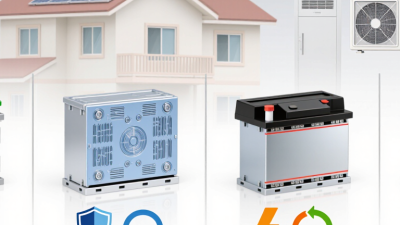
| Lithium iron phosphate (LFP) battery | Stores electricity through reversible lithium-ion reactions. LFP is a battery chemistry that can be used in AC-coupled, DC-coupled, or hybrid systems. | Residential units commonly range from about 5–20 kWh. | System-level output commonly ranges from about 3–11 kW. | Typically about 85–95%, depending on the inverter, operating conditions, and measurement method. | Households prioritizing thermal stability and frequent daily cycling. | Cycle life and usable capacity vary by cell design, temperature, depth of discharge, and control settings. |
| Nickel manganese cobalt (NMC) battery | Uses a different lithium-ion cathode chemistry and is integrated with an inverter and battery-management system to control charging and discharging. | Residential units commonly range from about 5–20 kWh. | System-level output commonly ranges from about 3–11 kW. | Typically about 85–95%, depending on the complete system and operating conditions. | Homes comparing compact battery options and available system designs. | Compare the stated usable capacity, temperature limits, warranty terms, and safety requirements for the specific system. |
| Whole-home backup configuration | A battery, inverter, transfer equipment, and compatible electrical panel work together to supply some or all household circuits when grid power is unavailable. | Often 10–30 kWh or more, depending on outage duration and household demand. | Often 5–15 kW or more when designed for larger loads; surge capability also matters. | Depends on the battery and inverter architecture. | Homes seeking backup for multiple circuits or larger household loads. | Heating, cooling, cooking, and other high-demand loads can quickly increase required battery capacity and power output. |
| Essential-load backup configuration | A transfer switch or backup panel isolates selected circuits so the battery can supply priority loads, such as refrigeration, lighting, internet, and some outlets. | About 5–15 kWh may cover selected loads for several hours or longer, depending on usage. | Often about 3–8 kW, subject to the inverter and the loads used at the same time. | Depends on the battery and inverter architecture. | Households seeking lower-cost outage protection for essential circuits. | Runtime depends on actual energy use; reducing simultaneous loads can extend backup time. |
How the system works: Solar panels produce DC electricity. An inverter converts electricity to AC for household use, while a battery stores surplus energy as DC. When solar generation is low or the grid is unavailable, the inverter supplies power from the battery. Figures above are representative industry ranges, not specifications for a particular product; actual performance depends on equipment, installation, temperature, settings, and local electrical requirements.