China’s ESS Storage industry has moved from pilot projects to large, bankable energy systems. Global buyers now face a crowded supplier market. Product brochures alone cannot show long-term performance.
This guide examines China’s top 10 ESS Storage manufacturers through practical buyer criteria. These include battery chemistry, usable capacity, round-trip efficiency, thermal control, and system safety. We also consider certifications, factory quality systems, software capability, warranty terms, and overseas service. A containerized system may look impressive at a trade show. Its real value appears after years of heat, dust, grid fluctuations, and daily cycling.
Dr. Imre Gyuk, a recognized energy-storage expert, has stated, “Energy storage is a critical part of the transition to a clean energy future.” His view reflects the market’s central challenge. Storage is not only a battery purchase. It is an operational asset that must support reliable power, predictable revenue, and responsible risk management. The selected manufacturers are assessed using public technical information, project experience, and evidence of international delivery. Still, no ranking can fit every market. A utility-scale buyer may value megawatt-hour pricing, while a commercial user may prioritize compact design and fast maintenance. That difference matters. Some supplier claims also require deeper verification. Buyers should request test reports, degradation assumptions, fire-protection details, and local support contacts before signing. This article offers a focused starting point, not a substitute for technical due diligence.
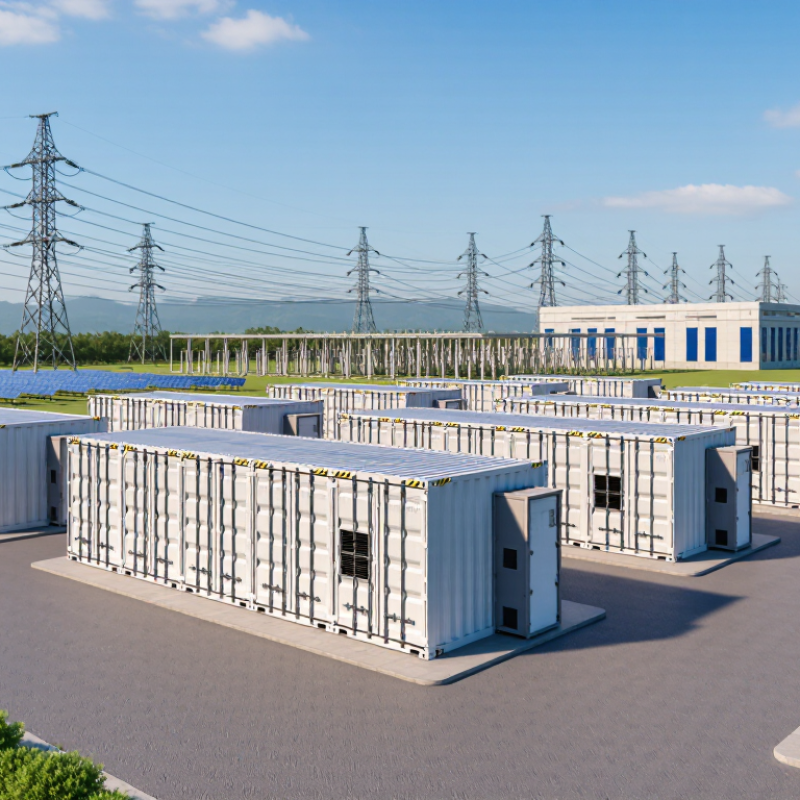
China’s energy storage system (ESS) market now shapes domestic power balancing and global battery supply. Its growth appears in grid projects, factory halls, and containerized systems beside solar farms.
China’s National Energy Administration reported 31.39 GW of new-type energy storage capacity by the end of 2023. That figure excludes conventional pumped storage, so comparisons require care. The International Energy Agency reported nearly 42 GW of battery storage additions worldwide in 2023. China, the United States, and Europe represented about 90% of those additions.
This concentration gives Chinese ESS manufacturers deep experience with large-scale deployment, cell integration, and cost control.
For global buyers, scale is useful, but it is not enough.
A serious evaluation should examine cell traceability, thermal propagation tests, inverter compatibility, degradation curves, and after-sales response. Ask for measured round-trip efficiency, not only a catalogue value. Check performance at high temperatures and partial states of charge.
The IEA’s Batteries and Secure Energy Transitions report states that China held over 80% of global battery-cell production in 2023. This advantage supports competitive pricing and shorter production cycles. Still, supply-chain concentration creates exposure to shipping delays, policy changes, and uneven service quality.
Some project data remain difficult to compare because “installed capacity” and “usable capacity” are reported differently. The market is advancing quickly. It is not perfectly transparent.

Selecting China’s top ESS storage manufacturers requires more than comparing shipment figures or glossy product brochures.
I examine proven field experience, engineering depth, and production consistency. Factory visits can reveal details that websites hide, such as cell storage conditions, torque records, and final inspection routines.
Technical selection begins with safety and performance.
I review battery chemistry, thermal management, fire protection, enclosure ratings, and system efficiency. Independent test reports matter. So do certifications accepted in the target market. A reliable supplier should explain its test methods, degradation assumptions, and warranty limits in clear language. If the data looks perfect, I ask harder questions.
Manufacturing capacity is only one part of the decision.
I also assess software monitoring, grid integration, spare-part planning, and service response times. A practical test includes requesting a fault-handling procedure and checking whether engineers answer specific questions. Customer references are useful, but they can be incomplete.
Some projects perform well only because local technicians compensate for weak documentation. That risk deserves attention. I compare delivery records, contract transparency, and long-term support before ranking any manufacturer.
China’s top ten ESS storage manufacturers serve different project needs. One focuses on modular lithium iron phosphate cabinets for factories and commercial buildings. Another develops containerized systems with liquid cooling, fire detection, and remote monitoring. A third supplies high-voltage battery racks for utility-scale installations. Its engineers emphasize thermal consistency across long cable runs.
A fourth manufacturer is known for compact residential units, often paired with rooftop solar and hybrid inverters. A fifth builds outdoor enclosures for humid coastal regions, using corrosion-resistant coatings and sealed cable entries.
Another specializes in battery management systems, collecting cell-level voltage and temperature data. This detail matters during commissioning.
A seventh supplier combines batteries, power conversion equipment, and energy management software in one package. That can simplify integration, though compatibility still requires testing.
The eighth profile represents a manufacturer with strong automated cell assembly and traceability controls. Its production records can help buyers investigate abnormal capacity loss. The ninth serves microgrids, balancing diesel backup, solar generation, and peak demand. The tenth develops customized systems for data centers, where response time and redundancy receive close attention.
Factory size alone proves little.
Buyers should review audited test reports, warranty conditions, degradation assumptions, and service response procedures. Site experience also matters. A technically impressive cabinet may perform poorly when ventilation, dust control, or grid settings are overlooked.
Some suppliers present optimistic cycle-life figures under laboratory conditions. Real projects face heat, partial charging, delayed maintenance, and uneven loads. That gap deserves careful questioning.
China Top 10 ESS Storage Manufacturers for Global Buyers
A useful comparison starts with product architecture, not catalogue capacity. China’s leading ESS suppliers commonly offer LFP battery racks, power conversion systems, and energy management software. LFP improves thermal stability, while NMC can provide higher energy density. The choice depends on land cost, climate, and operating profile. Not just containers.
BloombergNEF reported an average lithium-ion pack price of 115 dollars per kWh in 2024, down 20% year on year. This decline improves project economics, but price alone can hide weaker warranties, limited spare parts, or unclear degradation clauses. Buyers should compare usable capacity, round-trip efficiency, cycle testing, and auxiliary consumption. Details matter. The IEA’s Batteries and Secure Energy Transitions report projects battery demand to grow sixfold by 2035, increasing pressure on raw materials, recycling, and supply-chain traceability.
Global capability requires more than export experience. Check compliance evidence for IEC 62933, UN 38.3, and local fire-safety requirements. Ask for thermal-runaway test results, emergency shutdown procedures, and documented software update policies. Deployment teams should also explain performance in hot, humid, dusty, or freezing sites. A 20-year design life may sound attractive, yet it needs assumptions about cycling, temperature, and maintenance. Some comparisons still overvalue container size and undervalue service response time. That is a weakness worth challenging.
Comparison of Products, Technologies, and Global Capabilities
This non-branded benchmark summarizes commonly published specifications and market capabilities of leading Chinese utility-scale ESS suppliers. The figures are reference values rather than company-specific results: LFP batteries dominate stationary storage, 1500 V DC architectures are widely used, typical round-trip efficiency is about 90–95%, and 10-year warranties with 20-year design-life options are widely available.
For international buyers, choosing an energy storage system (ESS) supplier requires more than comparing battery prices. Start with the project’s duty cycle, local grid conditions, climate, and planned expansion. Ask for measured round-trip efficiency, usable capacity, degradation data, and response time. Marketing figures are not enough. Ask for evidence. Request test reports, warranty terms, and clear definitions for capacity loss. A reliable supplier explains both strengths and limitations. That honesty matters.
Factory capability should be verified, not assumed. Review cell traceability, production records, incoming inspection, and end-of-line testing. An independent audit can reveal weak fire controls, inconsistent welding, or poor documentation. Check whether the supplier can provide installation drawings, communication protocols, spare-parts planning, and remote diagnostics. For outdoor projects, examine enclosure ratings, thermal management, corrosion protection, and operation across expected temperatures. Local service capacity is equally important. A technically strong system becomes difficult when replacement parts take twelve weeks.
International compliance needs careful review. Confirm applicable safety, transport, grid-connection, and recycling requirements in the target market. Ask who owns certification updates when the design changes. Study the contract’s delivery milestones, performance guarantees, liquidated damages, and data-privacy responsibilities. Visit a running project if possible, and speak with its operator, not only the sales team. No supplier is perfect. One recurring lesson is that a detailed proposal may hide unclear auxiliary-power consumption, changing the project’s real economics.
Anonymous industry benchmark for comparing Chinese ESS suppliers. The figures below represent commonly published commercial-system ranges and internationally recognized requirements; actual values must be verified against the specific product, project configuration, contract, and destination-market regulations.
| No. | Evaluation Dimension | Typical Market Reference | What International Buyers Should Verify | Commercial Importance |
|---|---|---|---|---|
| 01 | Battery Chemistry | LFP / LiFePO₄ Most new stationary ESS projects use lithium iron phosphate because of its thermal stability, cycle performance, and cobalt-free chemistry. |
Cell manufacturer, cell format, energy density, operating temperature range, state-of-charge limits, and independent cell test reports. | Directly affects safety, usable capacity, service life, site footprint, and project insurance requirements. |
| 02 | Usable Energy and System Scalability | Commercial containerized systems commonly range from approximately 1 MWh to more than 5 MWh per container, depending on design and cell configuration. | Usable rather than nameplate capacity, DC-to-AC ratio, parallel expansion limits, maximum container quantity, and compatibility with the selected PCS. | Determines whether the supplier can support both pilot projects and larger utility-scale deployments. |
| 03 | Round-Trip Efficiency | Approximately 85%–95% at system level is a common commercial range, depending on PCS loading, auxiliary consumption, temperature, and test conditions. | AC-to-AC test method, operating point, auxiliary-load calculation, degradation assumptions, and guaranteed efficiency at partial load. | Higher efficiency reduces energy losses and improves the long-term financial return of frequency regulation, arbitrage, and renewable integration. |
| 04 | Cycle Life and Degradation | Many LFP ESS products advertise more than 6,000 cycles under defined temperature, depth-of-discharge, and end-of-life conditions. | Cycle-test protocol, end-of-life capacity threshold, annual throughput limit, warranty degradation curve, and whether calendar aging is included. | Cycle-life claims are meaningful only when the test conditions match the buyer’s intended daily operating profile. |
| 05 | Safety and Fire Protection | Modern systems may include cell-level monitoring, rack-level protection, gas detection, smoke detection, thermal management, and suppression equipment. | Risk assessment, thermal-runaway propagation test, emergency shutdown logic, fire-protection method, ventilation design, and site separation requirements. | Safety documentation is essential for permitting, insurance approval, grid interconnection, and acceptance by local authorities. |
| 06 | International Certifications | Relevant frameworks may include IEC 62619, IEC 63056, IEC 62477-1, UN 38.3, UL 9540, UL 9540A, NFPA 855, CE, and destination-country grid codes. | Certificate holder, tested model number, report scope, laboratory accreditation, expiration status, and whether the complete system—not only the cells—is covered. | Correct certification can prevent customs delays, redesigns, failed inspections, and costly project commissioning problems. |
| 07 | Power Conversion and Grid Compatibility | ESS PCS units commonly support bidirectional operation, reactive-power control, frequency response, black start, and multiple grid-voltage options. | Rated and overload power, voltage and frequency range, harmonics, power-factor range, protection functions, communication protocols, and local grid-code compliance. | Battery capacity alone does not guarantee grid performance; the PCS and control software determine actual dispatch capability. |
| 08 | Environmental Operating Range | Outdoor systems are often designed for approximately -20°C to 50°C ambient operation, with derating or thermal management outside the optimum range. | Guaranteed performance temperature, humidity rating, altitude derating, corrosion protection, ingress protection, HVAC energy consumption, and noise level. | Climate suitability influences system availability, auxiliary consumption, maintenance frequency, and enclosure life. |
| 09 | Warranty and After-Sales Support | Commercial ESS warranties commonly cover approximately 5–10 years, subject to throughput, operating conditions, and retained-capacity requirements. | Capacity warranty, performance warranty, response-time commitment, spare-parts policy, remote monitoring, software support, local service capability, and exclusions. | A strong warranty is valuable only when the supplier has the financial, technical, and regional service capacity to honor it. |
| 10 | Supply Chain, Delivery, and Documentation | Project lead times commonly range from several weeks to several months, depending on customization, certification, cell availability, and shipping requirements. | Bill of materials, production capacity, factory acceptance testing, quality-control records, packaging compliance, Incoterms, insurance, delivery schedule, and change-control process. | Transparent documentation and reliable delivery reduce commissioning risk and make future system expansion easier to manage. |