What Is the Best Type of Home Battery Storage in China?
Choosing the best Home Battery Storage system in China is not a simple chemistry comparison. A battery must fit your home, electricity tariff, climate, and daily energy habits. A coastal apartment needs different planning from a rural house with rooftop solar.
Lithium iron phosphate, or LFP, is widely considered a strong option for residential use. It offers good cycle life, stable performance, and practical safety characteristics. Nickel-manganese-cobalt batteries can provide high energy density, but they require careful thermal management. Lead-acid systems may cost less initially, yet their usable capacity and service life can be more limited. Sodium-ion technology is developing quickly, although local availability and long-term field data still deserve attention.
Details matter.
A professional evaluation should check the inverter, battery-management system, backup circuits, installation space, and ventilation. In southern China, high humidity and summer heat can affect equipment performance. In northern regions, low winter temperatures may reduce charging efficiency. A 10 kWh battery does not always deliver 10 kWh to household appliances. Reserve capacity, conversion losses, and backup settings change the real result.
This guide compares these technologies through practical experience, manufacturer specifications, warranty terms, and safety documentation. It also considers Chinese household patterns, including air-conditioner loads, evening cooking, and peak electricity pricing. No single battery is perfect. I may favor LFP because it is familiar and widely supported, but that preference deserves questioning when budget, space, or local service access changes. Reliable decisions come from measured demand, qualified installation, and transparent after-sales support—not attractive capacity numbers alone.
Understanding China’s Home Battery Storage Market
What Is the Best Type of Home Battery Storage in China?
China’s home battery storage market is expanding with rooftop solar and rising electricity demand. Many households now consider batteries for evening use, backup power, and lower peak-hour costs. Demand differs across regions. Coastal homes may face humid conditions, while northern homes need reliable winter performance. Local installers must examine temperature, wall space, wiring, and household consumption before recommending a system. The market is not uniform.
For many homes, lithium iron phosphate batteries offer a practical balance between safety, lifespan, and daily cycling. They suit families that store solar energy during daylight and use it after sunset. Still, capacity labels can confuse buyers. A 10 kWh battery may provide less usable energy after reserve limits and conversion losses. A 5 kW inverter may also limit how many appliances operate together. Installation quality matters equally. Experienced technicians check ventilation, fire separation, cable protection, and moisture control. Small details matter.
China’s market is becoming more professional, but quality remains uneven. Remote monitoring can reveal temperature changes, charging faults, and unusual energy use. Warranty terms should explain cycle limits, service response, and replacement conditions. Some sales materials promise large savings without showing household load data. That is a weakness. Buyers should request a written energy estimate based on actual bills, not ideal weather. A cheaper system may become expensive if software support or local maintenance is weak. The best choice depends on safety checks, transparent data, and conditions inside the home.
Comparing Lithium-Ion, LFP, and Other Battery Technologies
Choosing home battery storage in China depends on safety, lifespan, space, and daily electricity patterns. Lithium-ion batteries remain popular because they store substantial energy in compact cabinets. They suit apartments and homes with limited installation space. However, their performance can decline faster under high temperatures or poor charging control.
LFP batteries use lithium iron phosphate chemistry. They usually offer stronger thermal stability and a longer cycle life than many conventional lithium-ion designs. This makes them attractive for homes using solar power every day. Their heavier structure may require more floor space. Their lower energy density is not always a serious disadvantage in a detached house. In practical installations, ventilation, certified protection systems, and professional commissioning matter as much as chemistry.
Other options deserve attention. Lead-acid batteries cost less initially, but they are heavier and often provide fewer usable cycles. Sodium-ion technology may become useful where cold-weather performance and material availability matter. Yet household experience with it remains more limited. Flow batteries can support large, long-duration systems, although their size and cost often challenge residential projects.
A careful assessment should include local temperatures, outage frequency, usable capacity, warranty terms, and maintenance access. Do not judge batteries by purchase price alone. A small system can be cheaper over time if it matches evening demand accurately. I would still avoid treating LFP as perfect; installation quality can undermine its advantages. Safety inspections and realistic load calculations remain essential.
Evaluating Capacity, Power Output, and Energy Efficiency
What Is the Best Type of Home Battery Storage in China?
Capacity should match a household’s real evening demand, not an impressive product label. A 10 kWh battery may provide less usable energy after reserve limits and conversion losses.
Measure lighting, refrigeration, cooking, and heating across several days. Seasonal differences matter.
A home in northern China may need more winter capacity for heating support. However, oversized storage can remain underused and increase the payback period.
Power output is equally important. Capacity tells you how long a battery runs, while power determines what it can run together. An induction cooker, water pump, and air conditioner may create a sharp peak.
Check continuous output, short surge capability, and inverter limits. Energy efficiency also deserves careful attention. Round-trip efficiency above 90 percent is useful, but real results depend on temperature, wiring, standby consumption, and charging habits.
Batteries perform differently in a cold garage and a ventilated utility room.
Keep this in mind.
In practical evaluations, the first sizing estimate is often wrong because residents forget seasonal appliances. Monitoring actual consumption for a month can produce a more reliable design.
I would not choose maximum capacity automatically; a balanced system with suitable output and stable efficiency usually serves a Chinese household better.
Checking Safety, Lifespan, Warranty, and Maintenance Requirements
A reliable home battery in China should be judged by safety evidence, not capacity alone. Lithium iron phosphate chemistry is generally preferred for residential systems because it offers strong thermal stability. The International Energy Agency reported that LFP batteries represented about 40% of electric vehicle batteries deployed globally in 2023. That trend supports their wider use in stationary storage, but chemistry alone is not a safety plan. Look for a certified battery management system, cell-level monitoring, over-temperature protection, and tested enclosure performance. Compliance with applicable Chinese standards and recognized IEC testing is essential.
Lifespan claims need careful reading. A system advertised for 6,000 cycles may assume shallow daily cycling, moderate temperatures, and controlled charging. Real household conditions can be harsher. BloombergNEF’s 2024 battery price survey showed continued cost reductions, yet lower prices may encourage compromises in thermal control or service support. A practical warranty should state years, cycle limits, usable capacity, retained capacity, and replacement procedures. Ten years is common, but the fine print matters more than the headline.
Maintenance is usually light, not zero. Keep the cabinet dry, unobstructed, and away from direct heat. Check ventilation, cable terminals, alarms, and software records at least annually. Dust can collect around outdoor equipment. Small faults are easy to ignore. That is a mistake. The China Energy Storage Alliance reported rapid growth in China’s new energy storage market in 2023, making installer quality increasingly important. A qualified local technician should review installation records and inspect the system after unusual noise, swelling, water exposure, or repeated shutdowns.
What Is the Best Type of Home Battery Storage in China?
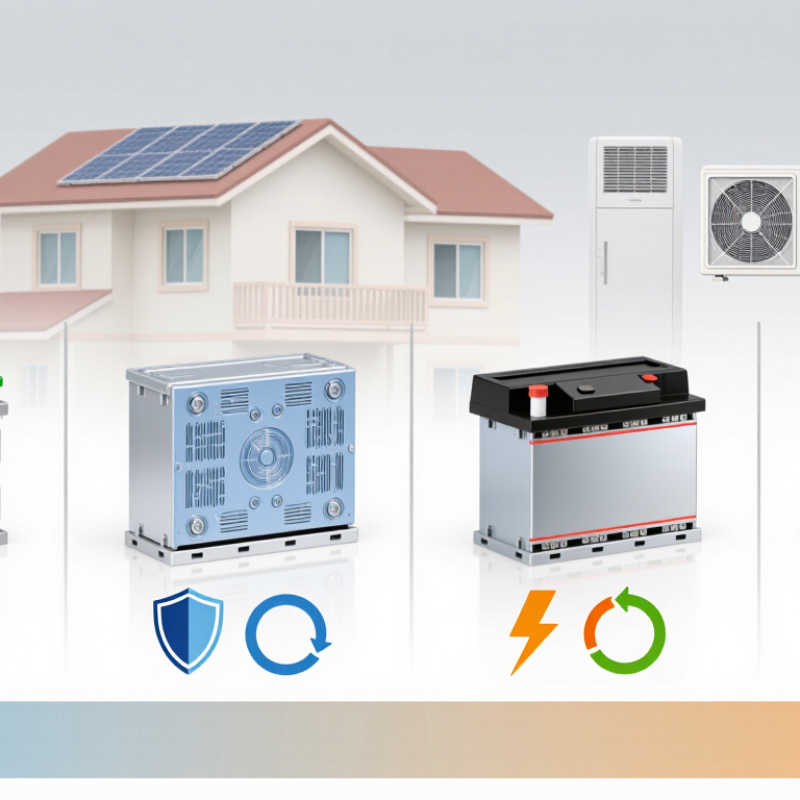
Safety, lifespan, warranty, and maintenance comparison based on typical residential battery specifications
LFP advantage: Lithium iron phosphate batteries generally offer higher thermal stability and approximately 4,000–8,000 full cycles under suitable operating conditions.
NMC profile: Nickel-manganese-cobalt batteries typically provide higher energy density, but residential systems commonly deliver about 2,000–4,000 full cycles.
Warranty and maintenance: Home-storage warranties commonly cover around 10 years or a specified energy throughput. Both chemistries normally require professional installation, ventilation checks, firmware updates, and periodic inspection.
The chart uses representative mid-range values from commonly published residential battery specifications. Actual performance depends on temperature, depth of discharge, charging rate, installation quality, and battery-management settings.