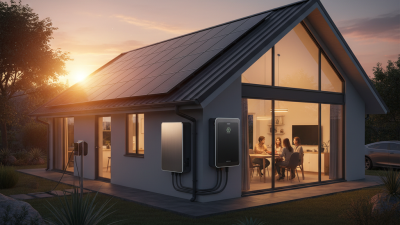
How to Choose the Best Home Solar Battery?
Choosing the right Home Solar Battery is less about chasing the largest capacity. It is about matching storage to your household’s daily rhythm, electricity rates, and backup expectations. A family using 12 kilowatt-hours each evening needs a different system from a small apartment using 5. Solar production also changes with clouds, roof direction, and seasonal sunlight. Real-world performance matters more than a glossy specification sheet.
Start with usable capacity, round-trip efficiency, power output, warranty terms, and safety certifications. Usable capacity tells you what the battery can actually deliver. Power output determines whether it can run a refrigerator, heat pump, or several appliances together. Check whether the warranty covers both years and energy throughput. Those details can prevent an expensive misunderstanding. A qualified installer should also assess your electrical panel, inverter compatibility, ventilation, and local grid requirements.
There is no perfect battery.
Lithium iron phosphate chemistry is widely valued for thermal stability and long service life, but every product has trade-offs. Some batteries offer strong backup power yet cost more upfront. Others are affordable but provide limited expansion or weaker monitoring software. A neat spreadsheet can still mislead. Ask for documented test data, clear installation costs, and realistic winter estimates. Compare at least three proposals, and question assumptions that sound too optimistic. The best choice should fit your home, budget, and comfort with maintenance—not merely win on paper.

Define Your Home’s Energy Needs and Solar Storage Goals
Choosing a home solar battery starts with a less glamorous question: what must remain powered?
The U.S. Energy Information Administration reports average residential electricity use reached 10,791 kWh in 2022, or roughly 30 kWh daily. That average hides important differences. A heat pump, well pump, electric cooker, or vehicle can reshape demand. Record 12 months of utility bills, then observe hourly usage with a smart meter.
Separate essential circuits from comfort loads. Refrigeration, lighting, internet equipment, and heating controls may matter during an outage. An 8 kWh battery might cover a careful evening, yet fail during a winter outage. If resilience is your goal, estimate critical loads and backup hours. If bill reduction matters more, compare solar production, evening demand, and tariff periods.
Efficiency matters.
Battery capacity is not the same as usable capacity. Reserve settings and conversion losses reduce delivered energy. NREL’s 2024 Annual Technology Baseline models lithium-ion systems with round-trip efficiencies near 85%, although household equipment varies. Request tested usable-energy figures, not only advertised capacity. The IEA’s 2024 Batteries and Secure Energy Transitions report says storage must expand sixfold by 2030 in its net-zero pathway. That does not mean buying the biggest battery. A careful plan may leave some appliances unprotected. That is uncomfortable, but often realistic.
Compare Battery Types, Capacity, and Usable Energy
Choosing a home solar battery starts with chemistry, not marketing claims. Lithium iron phosphate batteries offer strong thermal stability and long cycle life. Nickel-manganese-cobalt batteries usually provide higher energy density, but may need stricter temperature management. Lead-acid systems cost less upfront, yet their shorter life and lower usable capacity can change the calculation. The International Energy Agency reported that global battery storage capacity must grow from about 85 GW in 2023 to 1,200 GW by 2030 in its net-zero pathway. That growth highlights storage’s value, but household needs remain highly site-specific.
Capacity is measured in kilowatt-hours, but usable energy is smaller. A 10 kWh battery with 90% depth of discharge and 90% round-trip efficiency may deliver about 8.1 kWh. Night-time lighting, a refrigerator, and a small heat pump can consume that quickly. Check the continuous power rating too. A battery may store enough energy, yet fail to start a high-demand pump. Battery degradation also matters. A system that looks adequate today may feel undersized after several years. I sometimes see homeowners choose capacity from monthly electricity bills alone; that is an imperfect shortcut.
Tips: Compare usable kWh, not nominal capacity. Ask for cycle-life data at your expected temperature. Keep a backup reserve for outages. Use hourly consumption data when possible. The U.S. National Renewable Energy Laboratory’s storage cost projections also show that assumptions about duration and operating conditions strongly affect lifetime economics. A spreadsheet helps, but it cannot predict every cloudy week.
How to Choose the Best Home Solar Battery?
Compare battery types, capacity, and usable energy
This comparison uses a typical 10 kWh nominal battery. Usable energy depends on the recommended depth of discharge: lead-acid batteries commonly provide about 5 kWh, NMC lithium-ion batteries about 8 kWh, and LFP lithium-ion batteries about 9 kWh. Actual performance varies with system design, temperature, age, and operating conditions.
Evaluate Efficiency, Lifespan, Safety, and Warranty Terms
Choosing a home solar battery starts with usable performance, not the largest capacity number. Check round-trip efficiency: how much stored energy returns after charging and discharging. A battery rated at 90% efficiency loses about 10 kilowatt-hours per 100 stored. That loss matters during cloudy weeks. Compare usable capacity, continuous power, and peak output for appliances such as pumps or refrigerators. Ask how performance changes at low temperatures. Small details matter.
Lifespan needs two measures: expected cycles and calendar years. A product may promise thousands of cycles, yet heavy daily use can accelerate capacity loss. Read the degradation schedule in the warranty. It should state minimum retained capacity, allowed energy throughput, and replacement conditions. I would request test data from an installer, although test conditions may not match your home. My comparison focused too much on cycle counts. That was a mistake. Actual load patterns matter more.
Safety deserves evidence, not reassuring language. Look for recognized electrical and fire-safety certifications, battery management protections, thermal monitoring, and clear installation limits. Keep the unit away from living spaces when local guidance requires it. Warranty terms should cover labor, shipping, software support, and fault diagnosis, not only battery cells. Check who handles claims and how long service takes. A ten-year promise is weak if exclusions are unclear. Ask for the full document before signing. Also review maintenance requirements and emergency shutdown instructions with the installer.
Check Installation Requirements, Compatibility, and Monitoring Features
Choosing the best home solar battery begins with installation requirements, not advertised capacity. Ask a qualified installer to inspect your roof system, electrical panel, available wall space, and ventilation. The battery may need a dedicated circuit, clearance, weather protection, and local approval. A narrow utility room can quickly become a poor installation site. Do not assume your existing solar equipment will support battery storage. That assumption can become expensive.
Compatibility matters at every connection point. Check the battery’s voltage range, inverter requirements, backup-load capacity, and communication protocols. Confirm whether it works with your existing solar panels and whether firmware updates are available. An experienced electrician should also review wiring age, grounding, and panel capacity. Monitoring features deserve equal attention. Choose a system that shows charging, discharging, energy use, and faults clearly. Useful alerts can warn you before a small issue becomes a nighttime outage. A polished app is helpful, but it cannot repair weak installation planning.
Tips:
Request a written compatibility check before purchasing. Ask how long monitoring data remains available. Test the app during a site visit, if possible. Confirm who handles troubleshooting after installation. Think about winter performance, too. Real energy use often differs from estimates, and that difference should guide your final battery size.