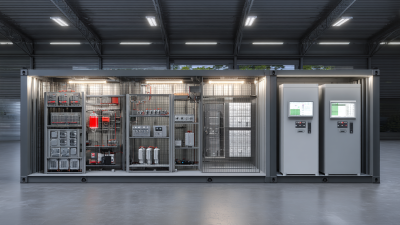
A Hybrid Energy Storage System combines two or more storage technologies to manage different power demands. A lithium-ion battery may provide steady energy for several hours. A supercapacitor can respond within milliseconds. Together, they can support renewable power, electric vehicle charging, microgrids, and industrial equipment more effectively than one device alone.
The idea is practical, not merely theoretical. Solar output changes when clouds cross a site. Wind production can rise sharply, then fall without warning. A hybrid system can absorb sudden fluctuations through a fast-response unit while preserving the battery for longer-duration supply. Dr. Imre Gyuk, a recognized energy-storage expert, has described energy storage as “a game changer.” His observation reflects the central value of hybrid design: flexibility under changing conditions.
Yet the technology is not automatically efficient. It requires accurate sizing, thermal monitoring, power electronics, and intelligent control software. A poorly tuned controller may increase losses instead of reducing them. Maintenance can also become more complicated because each storage technology ages differently. That weakness deserves attention.
This article explains what a Hybrid Energy Storage System is, how its components interact, and where it creates measurable value. It also examines battery-supercapacitor combinations, control strategies, safety considerations, lifecycle costs, and real-world limitations. The best design depends on the application. There is no universal formula. A system built for a remote solar station may perform poorly in a high-power transportation hub. Understanding that difference is essential for engineers, project owners, and informed buyers.

A hybrid energy storage system combines two or more storage technologies within one coordinated energy network. Each unit performs a different job. A battery may provide hours of energy, while a supercapacitor handles sudden power changes. Its core purpose is matching storage behavior to real operating needs. One device need not do everything.
At a solar facility, sunlight can shift quickly behind clouds. A fast-response unit can stabilize voltage and frequency in milliseconds. The battery then supplies steady power through the evening. A supervisory controller, power converters, sensors, and a battery management system coordinate these actions.
Engineers evaluate power rating, usable capacity, response time, temperature limits, degradation, and round-trip efficiency before selecting the combination.
This arrangement can reduce battery stress and improve reliability, but it is not automatically better. More equipment means more controls, maintenance points, and possible integration failures. In field assessments, a technically elegant design may still lose value if operators cannot monitor it easily. Designers sometimes oversize the fast unit, then discover its benefits rarely justify the added cost. Measured load data matters more than optimistic forecasts. Reliable design documents state assumptions clearly, test control responses, and allow for imperfect weather, aging cells, and changing demand.

A hybrid energy storage system combines different storage technologies to balance power, energy, cost, and service life. A lithium-based battery usually stores energy for longer periods, while a supercapacitor can respond within milliseconds. This pairing matters when a site faces sudden loads, such as a motor starting or a rapid voltage drop.
The battery management system monitors cell voltage, temperature, and state of charge. The power conversion system then changes direct current into grid-compatible alternating current. An energy management system coordinates these devices using demand forecasts, tariff data, and operating limits. During a short power surge, the supercapacitor can react first. The battery then supplies steady energy after the demand settles. Protection equipment disconnects unsafe circuits, while cooling systems control heat inside the enclosure.
These parts must communicate continuously. A delayed signal can cause unnecessary battery stress. Poor temperature control can also reduce available capacity. Field commissioning often reveals small issues, such as inaccurate sensors or unbalanced cells. They may look minor. They are not.
Control settings require careful testing under normal, peak, and fault conditions. Engineers should verify response time, efficiency, backup duration, and thermal behavior with measured data. The system is powerful, but not automatically efficient. A hybrid design can still waste energy when its control strategy is too conservative or poorly tuned.
| Component or Layer | Primary Role | Typical Technical Characteristics | How It Works With Other Components | Key Performance or Safety Considerations |
|---|---|---|---|---|
| Battery Energy Storage System | Stores electrical energy chemically and releases it when required. | Usually consists of cells, modules, racks, enclosures, and DC cabling. Lithium-ion systems commonly operate at several hundred volts DC, while capacity is specified in kWh or MWh. | Receives charging power through the power conversion system and supplies DC power during discharge. The battery management system supervises its operating limits. | State of charge, temperature, depth of discharge, charge rate, and cycle count affect usable capacity, efficiency, and service life. |
| Power Conversion System | Converts electricity between the battery's DC form and the AC form used by buildings or the grid. | Includes bidirectional inverters, filters, switching devices, protection functions, and grid-synchronization controls. Power is rated in kW or MW. | Follows commands from the energy management system and exchanges power with the battery, loads, renewable generators, and the electrical grid. | Conversion efficiency, response time, reactive-power capability, fault response, and grid-code compliance are important design factors. |
| Energy Management System | Optimizes when and how the storage system charges, discharges, or remains in standby. | Uses real-time measurements, operating limits, electricity prices, load forecasts, renewable forecasts, and user-defined priorities. | Sends setpoints to the power conversion system while receiving data from the battery management system, meters, renewable equipment, and site controls. | Control quality depends on accurate forecasts, reliable communications, appropriate dispatch logic, and clearly defined operating priorities. |
| Battery Management System | Monitors and protects individual cells and battery modules. | Measures cell voltage, temperature, pack current, state of charge, and state of health; may perform cell balancing and fault detection. | Provides safety limits and status information to the energy management system and power conversion system, which adjust or stop power flow when necessary. | Overvoltage, undervoltage, overcurrent, overheating, insulation faults, and abnormal temperature differences require protective action. |
| Thermal Management System | Maintains battery and power electronics within their specified temperature ranges. | May use air cooling, liquid cooling, heat exchangers, heaters, fans, pumps, and temperature sensors. | Responds to sensor data from the battery management system and coordinates with operating controls to reduce power or stop operation if temperatures become unsafe. | Uniform temperature distribution helps reduce degradation and improves available power. Cooling energy also affects total system efficiency. |
| Renewable Energy Interface | Connects variable renewable generation, such as solar or wind, to the storage system and local electrical network. | Includes renewable inverters, DC or AC coupling equipment, disconnects, measurement devices, and control interfaces. | Excess renewable generation can charge the battery, while stored energy can support loads when renewable output falls or demand rises. | The coupling design influences conversion losses, system flexibility, retrofit potential, and the ability to use renewable energy during outages. |
| Electrical Protection and Switchgear | Isolates faults and provides safe connection and disconnection of DC and AC circuits. | Can include fuses, circuit breakers, contactors, disconnect switches, surge protection, grounding equipment, and insulation monitoring. | Works with the battery management system, inverter controls, sensors, and emergency-stop circuits to interrupt abnormal current or unsafe conditions. | Protection must be coordinated for available fault current, DC interruption requirements, arc-flash risk, grounding method, and local electrical standards. |
| Fire Detection and Suppression | Detects abnormal conditions and limits the consequences of thermal events. | May include smoke, heat, gas, and flame detection, alarms, ventilation controls, compartmentation, and application-specific suppression equipment. | Receives signals from battery sensors and sends alarms or shutdown commands to the control and protection systems. | The design should address thermal runaway, gas accumulation, emergency access, spacing, ventilation, and applicable fire-safety requirements. |
| Measurement and Metering | Measures energy flow, power, voltage, current, frequency, and operating conditions. | Uses revenue meters, site meters, current transformers, voltage transformers, temperature sensors, and power-quality instruments. | Supplies the energy management system with the information needed for peak shaving, load shifting, renewable smoothing, and backup control. | Meter accuracy, sampling speed, time synchronization, and communication reliability affect control performance and settlement accuracy. |
| Communications and Supervisory Control | Allows system devices, operators, and external grid controls to exchange information and commands. | May use industrial networks, controller interfaces, remote monitoring, event logging, alarms, and cybersecurity controls. | Links the energy management system with meters, inverters, battery controls, site loads, renewable generators, and utility interfaces. | Redundant communications, role-based access, secure updates, data logging, and fail-safe behavior help maintain availability and security. |
| Grid, Load, and Backup Interface | Connects the hybrid storage system to facility loads, the utility grid, or designated backup circuits. | May include a main switchboard, automatic transfer equipment, microgrid controller, critical-load panel, and islanding controls. | Coordinates import, export, charging, discharging, load prioritization, and reconnection after an outage. | Backup operation requires appropriate isolation from the grid, sufficient reserve energy, compatible inverter controls, and a defined restoration sequence. |
Typical operating sequence: Renewable generation and grid power supply the loads first when available; surplus power charges the battery; the energy management system dispatches stored energy during peak demand, low renewable output, or grid outages; the battery management, thermal, protection, and safety systems continuously enforce operating limits.
A hybrid energy storage system combines two or more storage technologies in one coordinated installation. Each technology handles a different demand. Batteries provide sustained energy for hours. Supercapacitors respond to sudden power changes within milliseconds. This pairing can reduce battery stress during rapid charging or brief load spikes. A control system decides which device should react. Its settings depend on power demand, temperature, and state of charge. Field experience shows that sizing matters more than simply adding equipment. An oversized unit can raise costs without improving resilience.
One common type combines batteries with supercapacitors. Another uses batteries with flywheels. Flywheels deliver fast frequency support, while batteries cover longer interruptions. This arrangement suits facilities with motors, data equipment, or unstable renewable output.
A battery-thermal system stores electricity as heat, then uses that heat directly or converts it later. It may support industrial heating more efficiently than electrical reconversion. Thermal storage is not always a fit. Its value depends on a nearby, steady heat demand.
Larger installations may combine batteries with pumped hydro or compressed-air storage. These systems offer long-duration storage, but geography and construction needs can limit deployment. Some projects also pair hydrogen production with batteries. The battery manages quick fluctuations, while hydrogen supports longer gaps. That design adds conversion losses and operational complexity. Hybrid systems are therefore not automatically better. Engineers must compare response time, cycle life, safety controls, maintenance access, and actual load profiles. A design that looks efficient on paper may perform poorly under seasonal conditions. Monitoring data can expose this mismatch early, although forecasts remain imperfect.
A hybrid energy storage system combines two or more storage technologies in one coordinated setup. A battery may provide steady energy, while a supercapacitor handles sudden power spikes. In some projects, thermal storage or hydrogen systems add another layer of flexibility. The control system decides which resource should respond. This decision depends on demand, charge level, temperature, and electricity prices.
The main benefit is better performance across different operating conditions. Batteries can avoid repeated high-power shocks, which may reduce thermal stress and extend service life. Fast-response storage can stabilize voltage within milliseconds. Larger energy storage can then support a building through evening demand. During field testing, this division of work often makes equipment behave more smoothly. It can also reduce the need for oversized battery capacity. That sounds efficient.
However, hybrid systems are harder to design and operate. Each technology has different charging limits, degradation patterns, and safety requirements. Poor control logic may cause unnecessary energy losses. Extra converters, sensors, and software also increase installation and maintenance costs. A system can show strong laboratory results but perform differently in a dusty, hot facility. Real measurements matter.
Space requirements may increase, especially when separate enclosures and cooling equipment are needed. Operators also need technical training and clear emergency procedures. Battery replacement may occur earlier than expected if temperature control is weak. Forecasting errors can create avoidable cycling. This limitation deserves attention. A hybrid system is not automatically cheaper or cleaner; its value depends on accurate sizing, disciplined maintenance, and transparent performance monitoring.
A hybrid energy storage system combines different storage technologies to meet changing power demands. A battery can provide steady energy, while a supercapacitor responds quickly to sudden peaks. This shared workload can improve efficiency, extend battery life, and reduce stress during frequent charge and discharge cycles.
Common applications include solar microgrids, wind farms, electric vehicle charging stations, and backup systems for hospitals or data centers. In a solar microgrid, batteries may store daytime electricity for evening use. A fast-response device can handle motor starts or brief power surges. Field projects often reveal a practical issue: control software matters as much as hardware. Poor coordination can waste energy and increase maintenance costs. A larger system is not always a better system.
Tips: Match each storage unit to a specific duty. Check temperature control, replacement costs, safety testing, and available service skills before installation. Future systems will likely use smarter energy management, improved battery chemistry, and more accurate lifetime prediction. Digital monitoring may adjust power flows every second, based on weather, demand, and battery health. Reuse and recycling will also influence system design. Still, predictions can be too optimistic. Real performance depends on local regulations, climate, grid quality, and daily operating habits. Engineers should test these conditions before scaling a project.