Top 10 Home Solar Batteries for Global Buyers in 2026?
In recent years, Home Solar Batteries have gained significant traction among homeowners worldwide. These batteries store solar energy for later use, providing independence from traditional power grids. As energy prices continue to rise, the demand for efficient storage solutions is escalating.
By 2026, it’s essential to understand the top choices for Home Solar Batteries in the global market. Buyers will face various options, each with unique benefits and challenges. Some batteries boast impressive efficiency ratings, while others focus on affordability and durability. This diversity presents a dilemma for consumers seeking the best fit for their specific needs.
Experts suggest considering factors like capacity, lifecycle, and warranty. It’s crucial to reflect on the environmental impact and reliability of each product. While many solutions appear promising, the technology is still evolving. Thus, careful evaluation remains vital for informed decision-making. Homeowners should remain aware that the best choice today may need reevaluation in the future.

Overview of Home Solar Battery Technology Trends by 2026
The home solar battery market is experiencing a significant transformation. By 2026, the global demand for solar batteries is projected to grow by 30% annually, according to the International Energy Agency (IEA). Emerging technologies will play a crucial role in this growth. Innovations in lithium-ion and solid-state batteries enhance energy density and lifespan. However, challenges remain.
Cost is a primary concern. A report from BloombergNEF states that while prices are declining, affordability continues to be a barrier. The current average cost per kilowatt-hour for battery storage stands at about $300. Households considering solar solutions often hesitate due to high initial investments.
Recycling and sustainability are crucial topics too. As battery production increases, so does the need for responsible disposal and recycling methods. The industry must develop efficient recycling processes to minimize waste. A failure to address these issues could hinder overall adoption rates. Understanding these trends is essential for future buyers navigating the evolving solar battery landscape.
Detailed Review of the Top 10 Home Solar Batteries for Global Buyers
As the demand for renewable energy solutions rises, home solar batteries are becoming essential. A recent report by the International Renewable Energy Agency (IRENA) reveals that global solar battery storage capacity could surpass 300 GWh by 2026. This shift reflects the increasing need for energy independence and efficiency among homeowners.
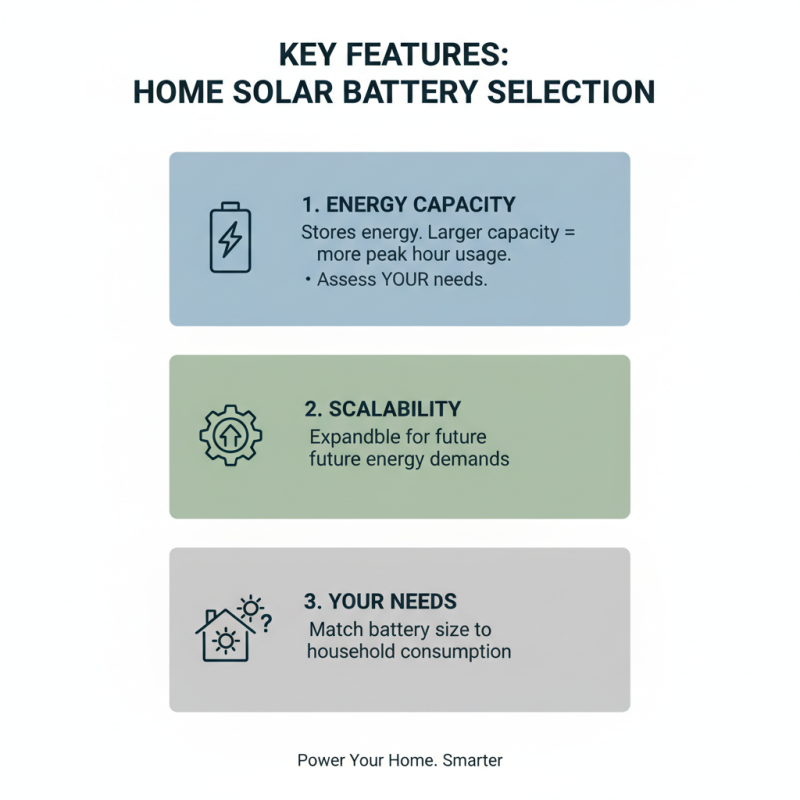
When exploring options, many buyers are concerned about capacity and lifespan. According to research from BloombergNEF, most homeowners seek batteries with at least a 10-year lifespan and a minimum capacity of 10 kWh. Consumers are often navigating a range of specifications and performance metrics, making informed decisions more challenging. However, advancements in technology are providing better choices, enhancing efficiency and reliability.
Battery safety also remains a crucial issue. Data from the U.S. Energy Information Administration (EIA) indicates that improper installation can lead to hazardous conditions. Homeowners should consider certified installers to mitigate risks. Transparency in warranties and performance guarantees is vital for gaining consumer trust. Addressing these complexities will help consumers make better-informed purchasing decisions in an evolving market.
Comparative Analysis of Performance and Pricing for Leading Models
As the demand for home solar batteries continues to grow, a comparative analysis of their performance and pricing is essential. Industry reports indicate that the market for residential energy storage is projected to expand significantly, reaching an estimated $20 billion by 2026. Notably, the efficiency of these batteries varies widely. Some models boast a round-trip efficiency over 90%. However, others fall short, with less than 80% efficiency, impacting their overall value proposition for homeowners.
Pricing also plays a crucial role in the decision-making process. Leading models typically range from $5,000 to $10,000. But hidden costs can inflate the final price. Installation fees and maintenance usually add 20% to 30% to the base cost. Many potential buyers overlook these additional expenses. Moreover, consumers need to consider battery lifespan, often around 10 years. The degradation rate is another factor, as some batteries lose capacity faster than expected.Yet, other options might provide better longevity with minimal performance drop-off.
Selecting the right solar battery requires careful consideration of these variables. Homeowners must evaluate not just the specs but the total cost of ownership. The distinction between cheaper initial models and more costly, higher-performing alternatives can be stark. Investing in the most efficient battery may lead to a better long-term energy solution.
Top 10 Home Solar Batteries for Global Buyers in 2026
Installation and Maintenance Tips for Solar Battery Systems in Home Use
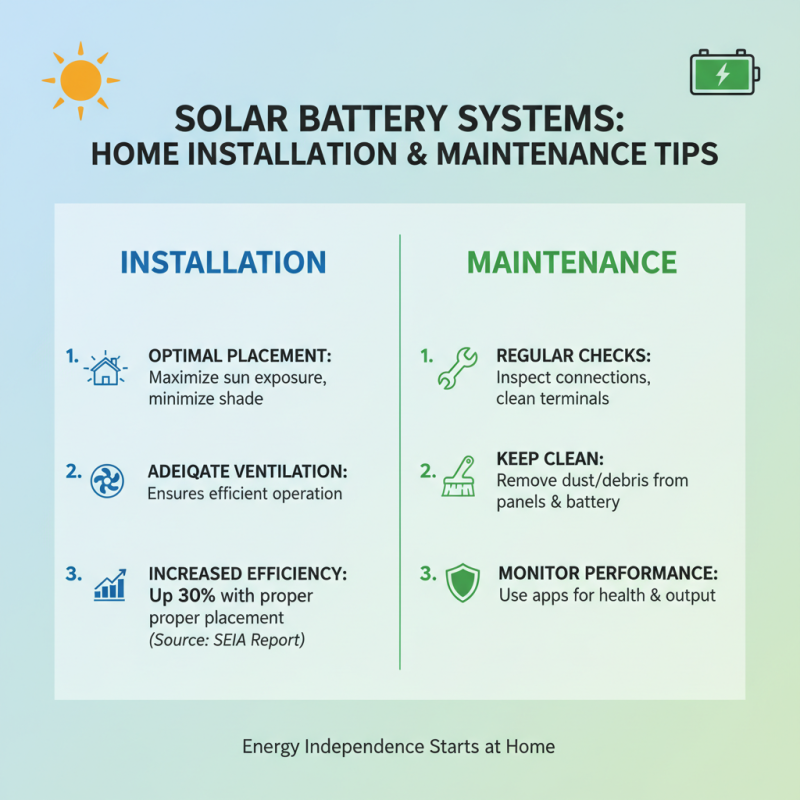
When setting up a solar battery system at home, proper installation is crucial. Start by ensuring your space has adequate sunlight exposure and ventilation. According to a recent report by the Solar Energy Industries Association (SEIA), optimal placement can increase energy efficiency by up to 30%. Choose a location that minimizes shade and maximizes sun exposure throughout the day.
Maintenance is another essential consideration. Regularly inspecting connectors and cables can prevent energy loss. The U.S. Department of Energy suggests testing battery performance every six months. Routine checks help identify potential issues early, enhancing system longevity. Pay attention to battery temperature; extreme heat can decrease efficiency, while cold temperatures can affect performance as well.
Documentation is vital. Keep a maintenance log to track performance metrics over time. This helps evaluate system effectiveness. Inconsistent readings may signal underlying issues, requiring reflection and potential adjustments. Remember, a well-maintained solar battery system not only saves money but also contributes to sustainability goals. These strategies are foundational in ensuring a reliable and efficient home solar energy system.