Top Solar PV and Battery Storage Trends for 2026?
As we look toward 2026, the Solar PV and Battery Storage industry is poised for significant transformation. Experts like Dr. Emily Thornton, a leading figure in renewable energy, emphasize, "The synergy of solar power and battery storage will redefine our energy landscape." This statement reflects the growing importance of these technologies in combating climate change.
The trends emerging in this field showcase a blend of innovation and adaptation. Integration of advanced battery technologies is crucial to store energy efficiently and meet peak demand. Solar PV systems are becoming increasingly affordable, making renewable energy accessible for all. However, challenges remain, such as energy management and grid compatibility.
While the future appears bright, it is vital to address ongoing concerns. The recycling of batteries and sustainability of raw materials require careful consideration. As we embrace advancements, we must also reflect on their broader impacts. Balancing growth with responsibility will be essential in shaping the future of Solar PV and Battery Storage.

Emerging Solar PV Technologies and Their Projected Market Adoption by 2026
The solar PV market is evolving rapidly. By 2026, several emerging technologies are set to reshape energy landscapes. Bifacial solar panels are gaining momentum. They can capture sunlight from both sides, increasing energy generation. This can lead to higher efficiency, especially in areas with reflected light, like deserts.
Perovskite solar cells are another intriguing development. They promise low production costs and high efficiency. However, stability remains a concern. Researchers are working hard to overcome this challenge. The commercial adoption of these cells might take time. Integrating them with traditional silicon cells could be a solution.
Energy storage technology is also evolving. Solid-state batteries are on the rise. They offer better safety and energy density compared to lithium-ion batteries. Yet, their high production costs may slow down market adoption. Exploring scalable and affordable production methods is crucial for the future of energy storage. Balancing innovation with practical implementation remains a key challenge.
Top Solar PV and Battery Storage Trends for 2026
| Trend |
Projected Market Adoption (%) |
Key Drivers |
| Bifacial Solar Panels |
45% |
Higher efficiency and energy yield |
| Integrated Solar and Storage Solutions |
50% |
Increased demand for self-consumption |
| Thin-Film Solar Technologies |
30% |
Flexibility and lightweight applications |
| Solar Plus Electric Vehicle Charging |
40% |
Growth in electric vehicle market |
| AI and Machine Learning in Solar Optimization |
35% |
Enhancing system efficiency and maintenance |
| Advanced Lithium-ion Battery Technology |
70% |
Improved energy density and cycle life |
Advancements in Battery Storage Solutions and Their Impact on Energy Storage
As we look toward 2026, advancements in battery storage solutions are set to reshape energy storage capacities. Recent studies indicate that the global energy storage market is expected to grow to over $300 billion by 2026. This growth is driven by technological innovations that improve battery efficiency and versatility. New chemistries, such as solid-state batteries, are likely to provide higher energy densities and longer lifespans. Enthusiasts are hopeful about these strides in battery technology.
However, challenges remain. The production of batteries often relies on scarce materials, raising sustainability concerns. A report from the International Energy Agency highlights that lithium-ion batteries can face supply chain issues. This could stall progress if not managed properly. The industry must assess sourcing strategies to protect its growth. Moreover, recycling processes still lag behind production rates, leading to environmental concerns.
As battery storage solutions evolve, their impact on energy usage cannot be overlooked. An estimated 40% of renewable energy production is wasted due to inadequate storage. Improving battery technology can significantly reduce this waste. This is a critical area for future investment and research. Addressing these imperfections is vital for a sustainable energy future.
Economic Trends Influencing Solar PV and Battery Storage Investments by 2026
As we look towards 2026, economic trends will significantly shape investments in solar PV and battery storage. The increasing need for clean energy is driving demand. However, not every investment yields immediate returns. Investors must analyze long-term possibilities carefully. Economic growth can foster innovation, but it also brings risks ahead.
Government policies may shift, affecting subsidies and incentives. Such fluctuations can create uncertainty in the market. The cost of raw materials is another factor. Solar panels and batteries depend on these materials, which can fluctuate in price. Optimism surrounds technological advancements, yet they often require time to implement effectively.
Consumer awareness is growing. Many are eager to adopt renewable solutions, but some remain hesitant due to costs. Affordability is key in expanding the market. Education and transparency will help bridge this gap. Investments must also consider societal impacts. Sustainable practices are essential, yet achieving balance can be tricky. The road to 2026 is paved with both opportunities and challenges.
Policy and Regulatory Changes Shaping the Future of Solar and Battery Markets
Policy and regulatory changes play a crucial role in shaping the future of solar and battery markets. Governments worldwide are implementing new incentives to promote renewable energy. Increased subsidies for solar panel installations are one example. These initiatives aim to reduce carbon footprints and encourage sustainable practices. However, inconsistencies in policy can create confusion for consumers and installers alike.
The complexity of regulations also poses challenges. Different regions may have various rules governing solar installations and battery storage. This fragmentation can slow down market growth. Moreover, there is a risk that policies may shift, making investments uncertain. It is vital for stakeholders to stay informed and adapt to these changes quickly.
Innovations in technology often outpace regulation. While advancements are exciting, they create gaps in legislative frameworks. This disconnect can hinder effective implementation. Stakeholders must advocate for adaptive policies that can keep up with developments. There is room for improvement in collaboration between regulatory bodies and industry leaders. Addressing these challenges will be essential as the solar and battery storage markets continue to evolve.
Key Global Markets Driving Demand for Solar PV and Battery Storage Technologies
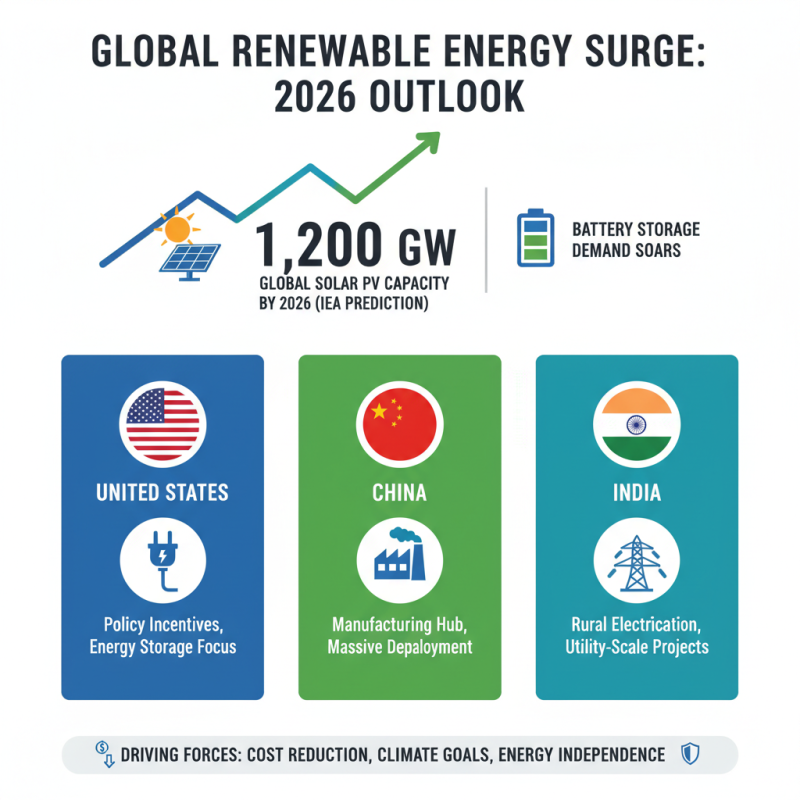
Global demand for solar photovoltaic (PV) and battery storage technologies is expected to surge in 2026. The International Energy Agency (IEA) predicts that global solar PV capacity will reach 1,200 gigawatts by 2026. This growth is driven by key markets such as the United States, China, and India. Each of these regions shows unique characteristics and challenges.
In the U.S., favorable policies support an increasing adoption of solar PV systems. States like California lead the way, accounting for nearly 50% of the country's total solar capacity. Yet, issues remain. Grid integration and storage limitations pose significant hurdles. Transitioning to a fully integrated energy system will take time and effort.
China, the largest producer of solar energy, is accelerating its transition. The country is expected to add about 300 gigawatts of new capacity by 2026. However, fast growth raises environmental concerns. The recycling of solar panels is still a challenge. Efforts are ongoing to improve sustainability while scaling production.
India's market for solar PV is also on the rise, with expected installations doubling in the next two years. Yet, infrastructure continues to lag behind demand. Investment in battery storage technology is crucial. The government aims to boost capacity, but delays in policy implementation have slowed progress. Overall, these global markets illuminate both opportunities and areas needing attention.