How to Choose Solar Panel With Battery for Home?
Choosing a Solar Panel With Battery For Home is not simply a matter of buying the largest system available. Your roof, electricity habits, local sunlight, and budget must work together. A compact south-facing roof may produce more useful energy than a larger shaded roof. That difference matters.
A practical assessment begins with your electricity bills and daily load pattern. Check how much energy your refrigerator, water heater, air conditioner, and evening appliances consume. A battery should match your night-time demand, not an impressive number on a brochure. Battery capacity, usable capacity, charging speed, inverter compatibility, and backup output all require careful comparison.
Look beyond panel wattage. Review temperature performance, degradation rates, product warranties, and independent certification. Lithium iron phosphate batteries often offer strong cycle life and stable operation, but every installation has different needs. A qualified installer should inspect roof structure, wiring, ventilation, emergency shutoffs, and local connection requirements. Safety comes first.
Do not ignore maintenance.
Real-world performance can disappoint when shading changes throughout the year. Software estimates may also differ from actual household behavior. I would leave some design margin, but not oversize the system without evidence. An energy audit, hourly consumption data, and several written quotations can reveal weak assumptions. This guide explains how to compare system size, battery storage, equipment quality, installation standards, and long-term value. The best choice is not always the cheapest or most powerful. It is the system that reliably supports your home’s priorities while remaining understandable, serviceable, and financially realistic.
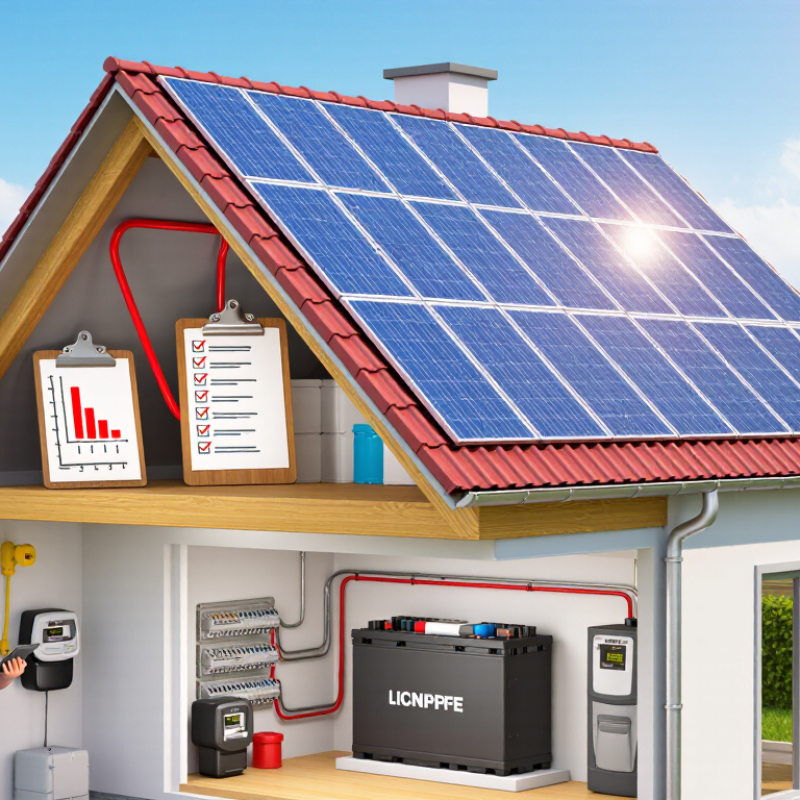
Audit 12-Month Loads and 15-Minute Peak Demand Before Sizing
How to Choose Solar Panel With Battery for Home?
A reliable system starts with evidence, not a guessed monthly average. Collect twelve months of electricity bills, including winter heating and summer cooling. Record each month’s kilowatt-hours, billing days, and unusual events. A home using 900 kWh in July may need more capacity than one using 900 kWh in spring.
Next, examine 15-minute demand data from a smart meter, if available. This reveals when several loads operate together, such as an oven, heat pump, water heater, and well pump. However, a 15-minute average can hide a motor’s short startup surge. Check appliance ratings and inverter surge requirements separately. Battery energy capacity covers duration. Battery power rating handles simultaneous demand. They are not interchangeable.
Tips: Build a simple load table with time, appliance, watts, and operating minutes. Mark essential circuits separately. Compare cloudy-day consumption with expected solar production. Leave practical reserve for battery aging and unexpected demand. My early estimate once ignored a workshop compressor, which distorted the result. Recheck your assumptions with measured data and a qualified electrical professional. Local wiring rules, emergency shutdown requirements, and installation conditions can change the final design.
Use NREL PVWatts to Estimate Site-Specific Solar Output
Choosing a solar panel with a battery starts with knowing your home’s actual solar potential. NREL PVWatts can estimate site-specific production using your location, roof direction, tilt, system size, and local weather data. Enter the roof’s usable area, not the entire roof. Vents, chimneys, and shaded sections reduce the practical panel space.
Use realistic settings. Include system losses, especially from wiring, temperature, dust, and inverter conversion. Check monthly results rather than relying only on annual energy. Winter output may fall sharply, even when the yearly total looks attractive. A cloudy January evening can expose an overly optimistic design.
Compare the estimated solar production with your electricity use. A battery should cover the loads you actually need, such as refrigeration, lighting, internet equipment, or medical devices. It should not be sized from panel capacity alone. Allow for usable battery capacity, reserve settings, and charging losses. PVWatts is valuable, but it is still an estimate, not a roof inspection or a guarantee. I would save several versions of the calculation and test different panel sizes. My first result might look precise, yet one tall tree could make it wrong. A local installer can verify shading, structural limits, wiring routes, and electrical requirements before purchase. Record your utility bills beside the PVWatts figures. Real usage may challenge your assumptions.
Compare LFP Batteries Using 6,000+ Cycle Claims and Warranty Terms
How to Choose Solar Panel With Battery for Home?
When choosing a home solar battery, I look beyond a 6,000-cycle claim. That number sounds impressive, but testing conditions matter. A cycle may mean a full charge and discharge under controlled temperatures. Daily household use is rarely so gentle.
LFP batteries usually offer strong thermal stability and long service life. Still, compare usable capacity, not only the advertised battery size. A 10 kWh unit may provide less energy after reserve limits and conversion losses. Ask how the cycle claim was measured. Check the stated depth of discharge, charging temperature, and remaining capacity after testing. Small details matter.
Warranty terms reveal more than marketing language. Look for the guaranteed years, cycle limit, energy throughput, and minimum end-of-warranty capacity. Some warranties cover ten years but restrict heavy daily use. Others reduce coverage when installed in high heat or poor ventilation. Confirm who handles replacement, labor, and shipping. These details can change ownership costs.
I would also match the battery with your household pattern. A family using evening power needs different capacity than a home with modest night consumption. Keep the battery in a shaded, ventilated space. Heat can quietly shorten its life. I once focused too much on cycle numbers and overlooked standby losses. That was a useful mistake. Reliable comparison requires reading the full warranty, not just the headline claim.
How to Choose Solar Panel With Battery for Home?
Comparing LFP battery cycle-life claims and warranty terms
The chart compares representative, anonymized LFP home-storage specifications commonly published in the market.
Cycle figures are usually based on defined depth-of-discharge and test conditions, while warranty coverage may also depend on operating temperature, annual energy throughput, and minimum end-of-warranty capacity.
A higher cycle claim should therefore be evaluated together with warranty duration and capacity-retention terms.