10 Essential Tips for Choosing Home Solar Batteries for Your Power Needs?
Selecting the right home solar batteries is crucial for optimizing your energy storage. With the growing emphasis on renewable energy, homeowners increasingly turn to solar solutions. However, choosing the best battery can be daunting. Each home has unique power needs, making it essential to understand your options.
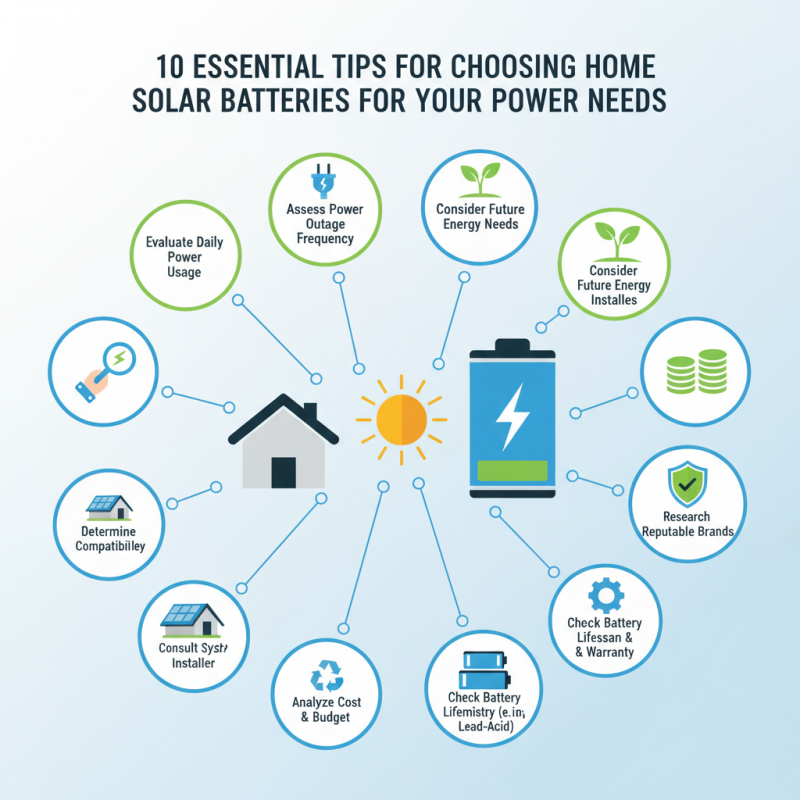
Home solar batteries come in various types and capacities. They vary in efficiency, lifespan, and cost. Evaluating your daily power usage can help guide your decisions. Consider how often you experience power outages. This affects the size and type of battery you may need. It's also important to think about future energy requirements.
While some batteries may offer great initial advantages, they might not last long-term. Researching reputable brands can enhance your confidence in this investment. With careful consideration and evaluation, you can find home solar batteries that meet your needs effectively.
Understanding Your Power Needs and Consumption Patterns
Understanding your power needs and consumption patterns is crucial for selecting the right solar batteries. Start by analyzing your monthly electricity bills. Identify peak usage times and high-demand appliances. This helps you gauge how much energy you really consume. Are there specific devices that drain power more than others? Tracking usage can reveal patterns that influence your battery selection.
Consider the size of your household and your lifestyle. A larger family with multiple electronics will require more capacity. If you work from home or have electric heating, your power needs might spike during the day. Reflect on seasonal changes too. Batteries must support your energy needs year-round. Failing to account for these fluctuations can lead to underperformance.
Moreover, think about your future goals. Are you planning to upgrade your appliances or expand your home? This can alter your energy demands. Be aware of the limitations of your current system. It’s essential to find a balance between capacity and budget. This requires meticulous planning and honest evaluation of your habits. Seek expert advice if you're unsure. Understanding your consumption patterns is a pivotal step in ensuring your solar investment pays off effectively.
Evaluating Different Types of Solar Batteries Available
When evaluating different types of solar batteries, understanding your power needs is crucial. Batteries vary in capacity, lifespan, and efficiency.
Lead-acid batteries are common and relatively low-cost but may require more maintenance. They're heavier and less efficient than newer technologies.
Lithium-ion batteries, while pricier, offer greater efficiency and longer lifespans. Their compact size makes them a popular choice in residential settings.
Consider your energy consumption patterns. A smaller household may benefit from a simpler battery solution. Larger homes or those with higher energy demands might need advanced options.
Some users find themselves confused by the specifications. It’s easy to be swayed by marketing rather than tangible benefits. Take the time to compare real user experiences and performance metrics.
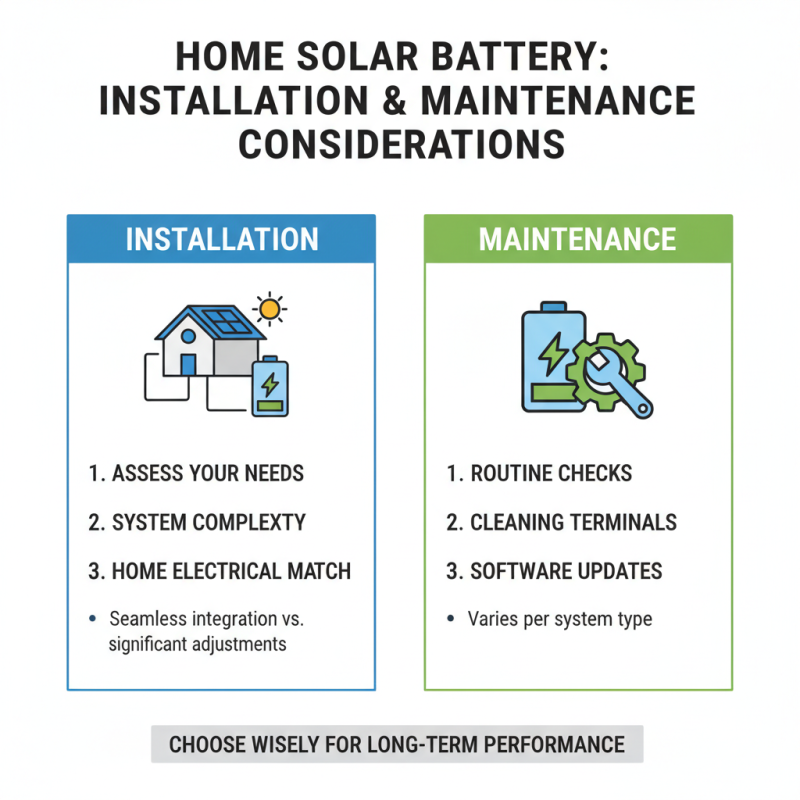
Another aspect to reflect on is the installation process. Some battery systems can be complex, requiring professional assistance. DIY enthusiasts may struggle with advanced setups.
It's vital to ensure that any chosen battery integrates well with existing solar systems. Don’t overlook the local climate; colder temperatures can affect battery performance.
Ultimately, the best choice is one that meets your unique needs while offering reliability over time.
Assessing Battery Capacity and Performance Metrics
When selecting home solar batteries, understanding capacity and performance metrics is crucial.
Capacity refers to how much energy a battery can store, typically measured in kilowatt-hours (kWh). According to the
U.S. Department of Energy, a home generally needs
between 10 kWh to 30 kWh to manage daily consumption effectively. However, seasonal energy use
can vary significantly, requiring careful assessment of personal energy patterns.
Performance metrics go beyond mere capacity. They include discharge rates and efficiency levels.
Discharge rates indicate how quickly a battery can release energy. A high discharge rate can sustain
more demanding appliances during peak usage. The efficiency rating reflects how much stored energy is usable after system losses.
The National Renewable Energy Laboratory states
that top-performing batteries should have an efficiency of at least 90%.
Nonetheless, not all advertised efficiencies translate to real-world performance, so users should be wary of marketing claims that may
not withstand scrutiny.
Longevity is another metric to consider. Most batteries have a lifespan of 5 to 15 years, depending
on usage and technology. Cycle life, or how many charge and discharge cycles a battery can endure,
is equally important. Choosing a battery with a higher cycle life can be a more sustainable option in the long run. However, many users
underestimate how regular cycling affects overall capacity. Understanding and evaluating these metrics will lead to a more informed and
ultimately more satisfying investment in solar battery technology.
Budgeting for Solar Batteries and Potential Savings Factors
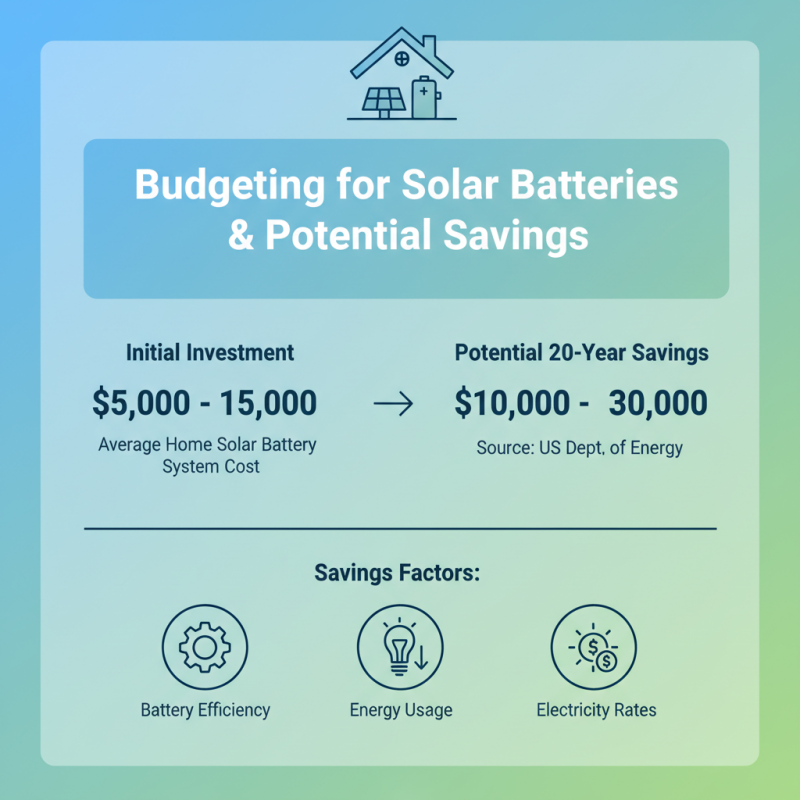
When considering solar batteries, budgeting is crucial. The average cost for a home solar battery system ranges from $5,000 to $15,000. This investment can lead to significant savings on energy bills. According to the U.S. Department of Energy, homes with solar energy can save between $10,000 and $30,000 over 20 years. However, these savings depend on various factors like battery efficiency and energy usage.
Understanding potential savings helps in making informed decisions. For instance, the average efficiency of solar batteries is around 85%. This means you lose some energy during storage. If energy prices rise, having a solar battery can hedge against these costs. Reports suggest that integrating a solar battery with a home system can increase home value by up to 20%. Yet, careful analysis of energy needs is essential. Overestimating usage can lead to buying a larger, more expensive battery than necessary. Conversely, underestimating could result in insufficient stored energy.