How to Choose the Best Home Battery Storage System?
In today's quest for sustainable living, choosing the right Home Battery Storage system has become essential. Experts like Dr. Emily Carter, a prominent figure in renewable energy, emphasize the importance of informed choices. She states, "The right battery can transform energy use in ways we are just beginning to understand." This highlights the impact of technology on our energy consumption.
Home Battery Storage systems allow homeowners to save energy for later use. They help in managing electricity costs and increase energy independence. However, numerous options on the market can be overwhelming. Each system comes with its unique features and specifications, making it crucial to evaluate them thoroughly.
Potential buyers must consider factors like capacity, efficiency, and warranty. An ill-informed choice could lead to inefficiency and higher costs in the long run. It reflects the need for careful thought. Your investment in a Home Battery Storage system could influence not just your finances but your overall impact on the environment.
Understanding Home Battery Storage Systems
Home battery storage systems are revolutionizing how we manage energy at home. Understanding these systems is essential for effective energy use. They store electricity generated from renewable sources, ensuring a steady energy supply. Knowing the differences between lithium-ion and lead-acid batteries is crucial. Lithium-ion batteries tend to have higher efficiency and longer lifespans, while lead-acid systems may be more affordable initially but require more maintenance.
Evaluating your energy needs is a vital step. Consider your average consumption and peak usage times. A good system should accommodate these factors. Installation and compatibility with solar panels are also important. Not all systems work with every solar setup. Homeowners often overlook the installation process, which can be complex. Expert advice is beneficial in this area.
While battery systems can provide independence from the grid, they are not perfect. Some users report capacity issues during high demand. Others face challenges with system integration. It’s essential to research and reflect on user experiences to avoid costly mistakes. A well-informed choice can lead to substantial savings and energy autonomy.
Key Factors to Consider When Choosing a Battery
When selecting a home battery storage system, several factors demand your attention.
Primarily, the battery capacity is crucial. A larger capacity can store more energy, allowing you to power your home during outages or at night.
Consider your daily energy consumption. Calculate how much energy your household uses regularly to determine what size battery suits you.
Next, look at the discharge rate. This rate indicates how quickly the battery can deliver energy.
A battery with a higher discharge rate can support demanding appliances.
Longevity is another key point. Investigate the expected lifespan of different battery systems.
A battery that can last many cycles will save you money over time.
Lastly, check the efficiency ratings. Efficient systems maximize energy use and reduce waste.
You may encounter trade-offs between capacity, cost, and efficiency.
This choice may require some reflection. Think about your specific needs and potential future energy demands.
Balancing these factors will help you select the right system.
Types of Home Battery Technologies Available
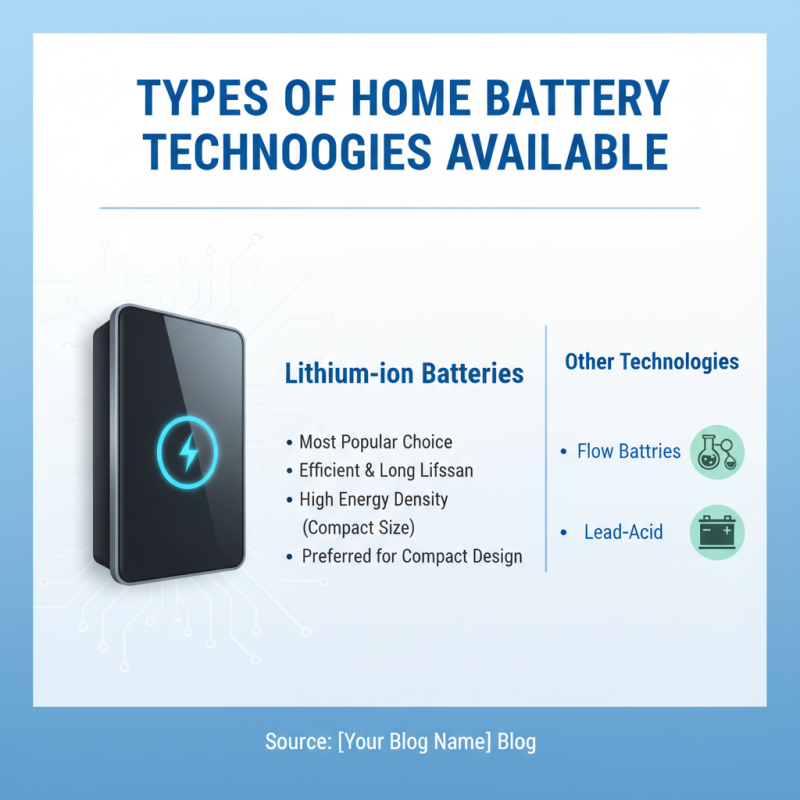
When considering home battery technologies, it's essential to understand the options available. Lithium-ion batteries are the most popular choice. They are efficient and have a longer lifespan. They can store more energy in a smaller size. Many homeowners prefer these for their compact design.
Lead-acid batteries are another option. They are generally less expensive but heavier. These batteries have been around a long time, and their technology is well understood. However, they may not last as long as lithium-ion solutions. Users should examine their energy needs and budget when choosing between these types.
Emerging technologies like sodium-ion and flow batteries are also worth mentioning. They may offer benefits in the future, but their reliability and performance require further research. It’s crucial to reflect on the advantages and disadvantages of each type. Each technology presents different challenges. Consider their efficiency, cost, and how they fit your specific energy requirements.
Evaluating Energy Needs and System Capacity
Evaluating energy needs is a critical step in selecting the best home battery storage system. Start by assessing your household's electricity consumption. Look at your utility bills for the past year. This data reveals peak usage times and general trends. You may find surprising spikes in energy use during certain months. Understanding these patterns can help you make more informed choices.
Next, consider your total energy requirements. Calculate your daily consumption in kilowatt-hours (kWh). If you have energy-intensive appliances, like air conditioning or electric heaters, factor them in. This will help determine the necessary capacity of your battery system. It’s helpful to overestimate slightly. Having a buffer can be beneficial during unexpected usage peaks or longer outages.
Finally, think about future needs. Are you planning to buy an electric vehicle or add solar panels? These changes will increase your total energy demand. Your battery storage should accommodate potential enhancements. Get an objective evaluation, perhaps from a home energy expert. They can provide insights tailored to your specific situation. Remember, making the right choice today can lead to long-term savings and energy independence.
How to Choose the Best Home Battery Storage System? - Evaluating Energy Needs and System Capacity
| Battery Type |
Capacity (kWh) |
Usable Capacity (kWh) |
Depth of Discharge (%) |
Cycle Life |
Cost ($) |
| Lithium-ion |
10 |
9 |
90 |
5000 |
7000 |
| Lead-acid |
12 |
6 |
50 |
1500 |
3000 |
| Nickel-based |
15 |
12 |
80 |
3000 |
6000 |
| Saltwater |
9 |
7 |
70 |
3000 |
5000 |
Cost Analysis and Return on Investment for Battery Systems
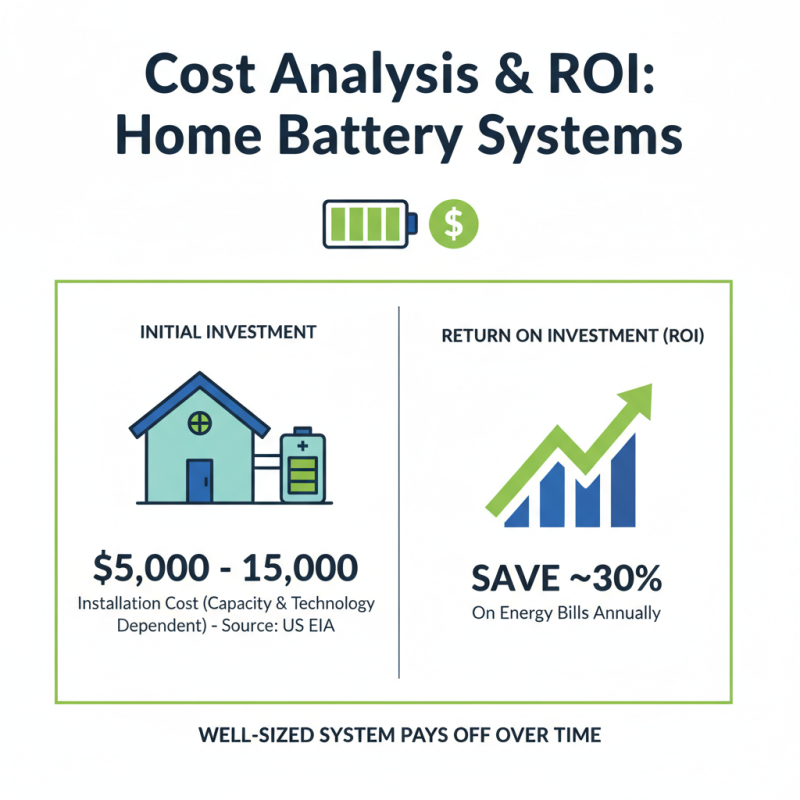
In recent years, home battery storage systems have gained prominence as energy solutions. Understanding the cost analysis and return on investment (ROI) associated with these systems is crucial for homeowners. Reports from the U.S. Energy Information Administration highlight that battery installation can range from $5,000 to $15,000, depending on capacity and technology. Typically, a well-sized system can save a homeowner about 30% on energy bills.
Many homeowners often overlook hidden costs, such as installation fees and maintenance. It's vital to conduct thorough research. A complete analysis of these factors gives a clearer picture of potential savings. According to Lazard’s Levelized Cost of Storage Analysis, the ROI is generally positive over a five to ten-year span, especially with increasing energy prices. The average payback period varies, but some systems achieve this within five years.
Tips: Assess your energy needs before purchasing. Research local incentives, as they can significantly affect total costs. Lastly, consult with energy experts for tailored advice. Paying attention to these factors can help prevent overinvestment and ensure a better fit for your home.