How to Choose the Best Energy Storage Devices for Your Needs?
In today's world, Energy Storage Devices have become essential for both residential and industrial applications. According to a recent report by the International Energy Agency, the global energy storage market is projected to grow significantly, reaching over $200 billion by 2025. This growth reflects the increasing demand for reliable and efficient energy solutions. With the rise of renewable energy sources, the role of Energy Storage Devices is more critical than ever.
Expert Dr. Emily Chen, a leading authority in energy storage technology, stated, “Choosing the right Energy Storage Devices can determine how effectively we manage energy requirements.” Many consumers and businesses struggle to understand the options available. Whether it is batteries for home use or large-scale solutions for utilities, each has its pros and cons. The wrong choice may lead to dissatisfaction and inefficiency, highlighting the need for informed decisions.
Moreover, technology is ever-evolving. New devices emerge regularly, and existing ones improve. Cost, capacity, and durability are factors to consider carefully. While some devices promise high performance, they may come with hidden costs. It’s a complex landscape, and making a perfect choice is challenging. Still, being educated on the available options is the first step to achieving energy independence.

Understanding Your Energy Storage Needs and Goals
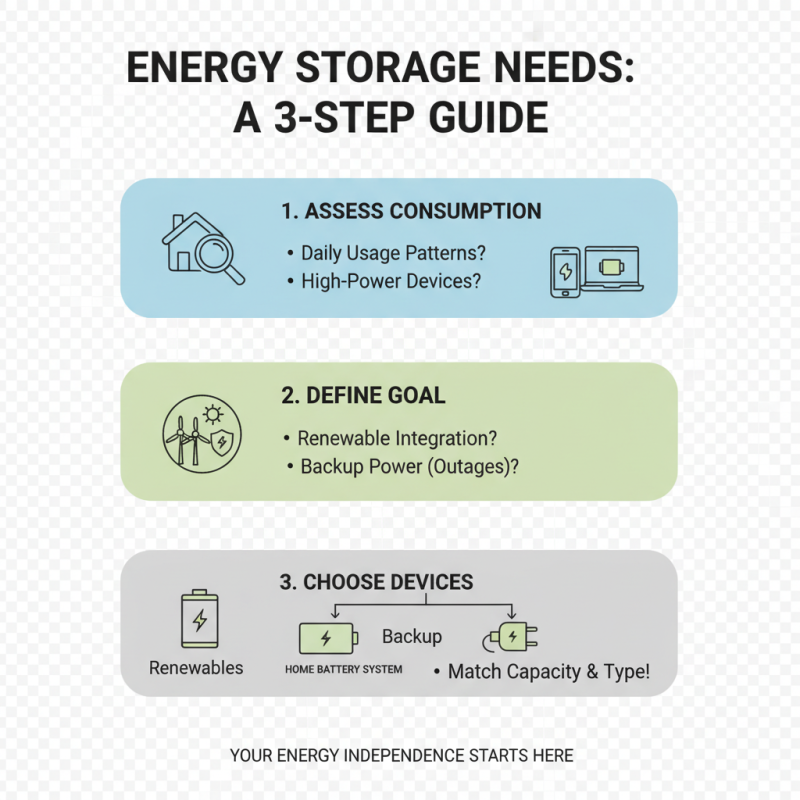
Understanding your energy storage needs starts with assessing your energy consumption. Are you primarily looking to store energy from renewable sources? Or do you need backup power for outages? Identifying this can guide your choice of devices. Consider your daily usage patterns. What devices consume the most power? This evaluation could highlight gaps in your current setup.
Next, think about your goals for energy storage. Are you aiming for energy independence? Lower utility bills? Perhaps you want to support sustainable living. The right device should align with these aspirations. Some devices may handle peak demand well, while others excel at long-term storage. Reflect on the space available for installation as well. Space constraints could limit your options.
Lastly, budget plays a crucial role. A high-capacity device may seem ideal, but it might exceed your budget. And not all high-capacity options ensure efficiency. Sometimes, smaller or less expensive devices can fulfill specific needs effectively. There’s no one-size-fits-all solution. You might need to experiment and reassess your choice over time.
Evaluating Capacity, Efficiency, and Lifespan of Storage Options
When considering energy storage devices, capacity, efficiency, and lifespan are crucial elements. Capacity refers to how much energy a device can hold. Larger capacity means longer usage times. However, larger may not always be better. Consider your specific energy needs. It’s often a balancing act. Sometimes, a smaller capacity aligns perfectly with daily energy demands.
Efficiency indicates how well the device converts and stores energy. A more efficient device wastes less energy during this process. Look for specifications that illustrate this metric. Often, manufacturers present efficiencies in percentages. Yet, these figures can be misleading. Real-world performance can vary significantly from advertised stats. It's essential to read user reviews about actual experiences.
Lifespan is another determinant when selecting an energy storage solution. This figure often predicts how many charge cycles the device can handle before performance declines. Various factors, such as temperature and usage patterns, can influence lifespan. However, environmental impact is often overlooked. Choosing a device with a shorter lifespan might seem cost-effective, but it can lead to more waste over time. Energy storage should be both a solution and a sustainable choice. Balancing these factors requires careful thought, as the perfect fit may not always be the most obvious one.
Energy Storage Device Comparison
Analyzing Cost, Maintenance, and Environmental Impact
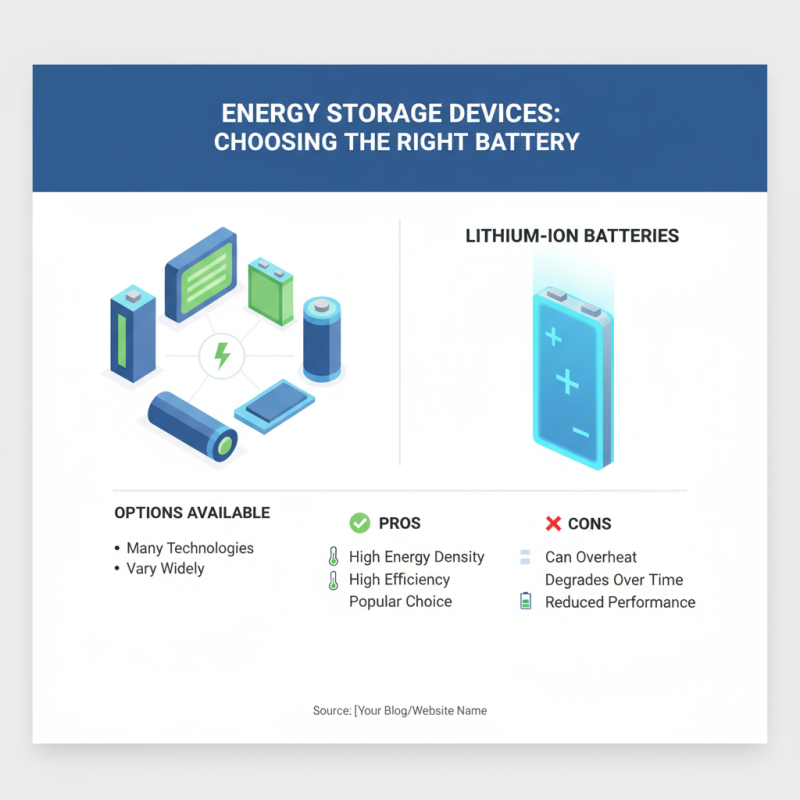
When choosing energy storage devices, cost is a pivotal factor. The initial investment can vary widely. For instance, lithium-ion batteries can range from $400 to $600 per kilowatt-hour. In contrast, lead-acid options sit lower, between $150 to $200 per kilowatt-hour. This discrepancy raises questions about long-term value. While lead-acid batteries cost less upfront, their shorter lifespan may lead to higher cumulative costs. A National Renewable Energy Laboratory report indicates that lithium-ion options may offer superior reliability over time.
Maintenance is another critical concern. Some energy storage devices may require regular upkeep. Lead-acid batteries often need frequent checks and electrolyte replacement. This can add ongoing expenses. On the flip side, lithium-ion batteries generally demand less attention. However, they still face potential issues, like thermal runaway, if not properly managed. As noted by the American Energy Society, approximately 20% of all battery failures are linked to improper maintenance.
Environmental impact is essential for a sustainable future. Battery production, particularly lithium extraction, can harm ecosystems. Mining for lithium contributes to habitat destruction and water shortages. A study by the International Energy Agency finds that recycling practices for batteries remain inadequate. Yet, advancements are underway. Innovative recycling methods could reduce waste and minimize the carbon footprint, promoting a more sustainable energy landscape. This evolving technology warrants cautious optimism and ongoing evaluation.
How to Choose the Best Energy Storage Devices for Your Needs? - Analyzing Cost, Maintenance, and Environmental Impact
| Device Type |
Cost (per kWh) |
Lifespan (years) |
Maintenance Frequency |
Environmental Impact |
| Lithium-ion |
$300 |
10-15 |
Every 5 years |
Medium |
| Lead-acid |
$150 |
3-5 |
Every 2 years |
High |
| Flow battery |
$400 |
10-20 |
Every 5-7 years |
Low |
| Sodium-sulfur |
$500 |
15-20 |
Every 6 years |
Medium |
| Nickel-cadmium |
$350 |
5-10 |
Every 3 years |
High |
Identifying Suitable Applications for Various Energy Storage Solutions
Selecting the right energy storage solution requires careful consideration of specific applications. Different technologies serve distinct purposes. For instance, lithium-ion batteries are often preferred for electric vehicles, while pumped hydro storage is more common in large-scale grid applications. According to a recent industry report, the global energy storage market is projected to reach over $300 billion by 2030. This growth reflects diverse needs across sectors.
Assessing energy requirements is crucial. Residential users often seek quick response times for solar energy integration. Meanwhile, industrial applications may demand larger capacities for load shifting and demand response strategies. A study indicates that approximately 40% of businesses are exploring energy storage for cost savings and operational efficiency. However, not all solutions fit every need perfectly. It's essential to weigh the trade-offs between cost, efficiency, and lifespan of various technologies.
Moreover, some users might overlook the importance of local regulations and incentives. These factors significantly influence the feasibility of deployment. In some regions, incentives for renewable integration may enhance the value of certain storage options. However, a miscalculation could lead to wasted investments. Understanding local energy markets and available support can provide insightful guidance. Always be prepared to reassess needs as technology and conditions evolve.