How to Choose Solar Panels and Battery Storage for Your Home?
As homeowners increasingly prioritize renewable energy, understanding how to select Solar Panels And Battery Storage becomes essential. According to a recent report by the Solar Energy Industries Association (SEIA), solar installations in the U.S. have grown over 167% in the past five years. This rapid growth points to the importance of educating homeowners on making informed choices about their solar solutions.
Industry expert Dr. Jane Smith emphasizes, "Investing in quality solar panels and efficient battery storage can significantly reduce household energy costs." As more people seek sustainable energy, the market for Solar Panels And Battery Storage continues to expand. Factors like efficiency ratings, warranty periods, and long-term savings should guide decisions. Nevertheless, many homeowners hesitate, confused by the numerous options and pricing structures.
Finding the right balance of performance and affordability is challenging. Homeowners need to reflect on their power needs and future energy goals. The journey to effective Solar Panels And Battery Storage is both complex and rewarding, demanding careful consideration and ongoing learning.
Understanding Solar Panels: Types and Technologies
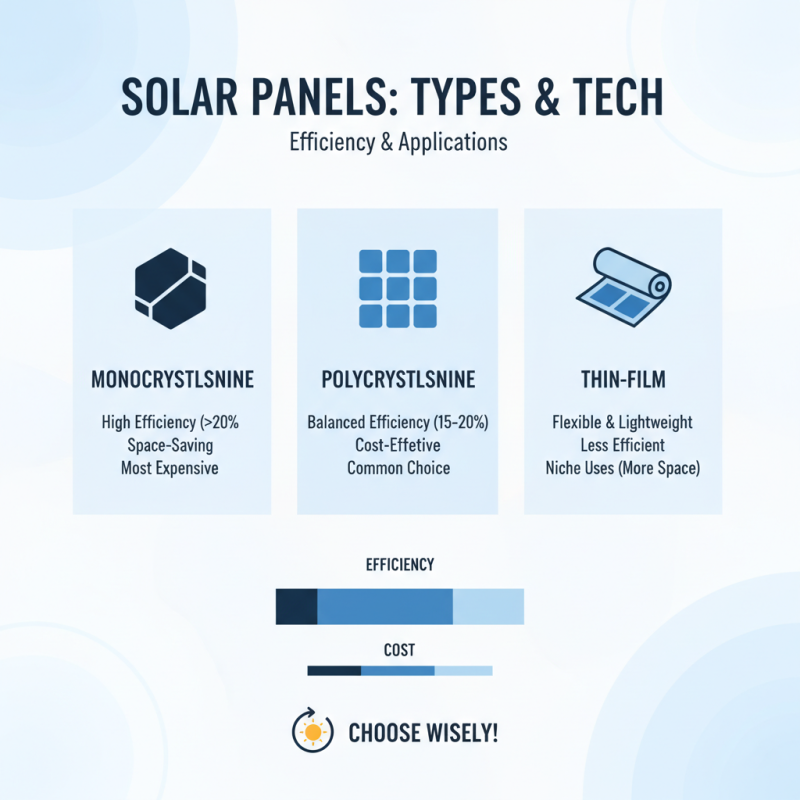
When selecting solar panels, understanding the types and technologies is crucial. There are primarily three types: monocrystalline, polycrystalline, and thin-film. Monocrystalline panels are known for their high efficiency, often exceeding 20%. This means they convert more sunlight into electricity compared to others. However, they are usually the most expensive option available. In contrast, polycrystalline panels offer a balance between cost and efficiency, generally ranging from 15% to 20%. Thin-film panels, while less efficient, are lightweight and flexible. They can be a good choice for specific applications, but they require more space for the same output.
Current data shows that solar panel installation has surged over 25% in the past year alone. This growth indicates a rising interest in renewable energy solutions. However, many homeowners underestimate the necessary system size. Reports suggest that a typical household requires around 5 to 8 kW of solar power. Failing to account for this can lead to insufficient energy production. It’s essential to carefully assess daily energy consumption patterns.
Battery storage is another critical consideration. Lithium-ion batteries dominate the market, known for their longevity and efficiency. However, they can be costly and might not suit every budget. Alternatives like lead-acid batteries are cheaper but have shorter life spans. Many owners find themselves evaluating their energy needs poorly, leading to challenges in achieving energy independence. Understanding these variables can significantly enhance the solar experience for any homeowner.
Evaluating Your Home's Energy Needs and Consumption Patterns
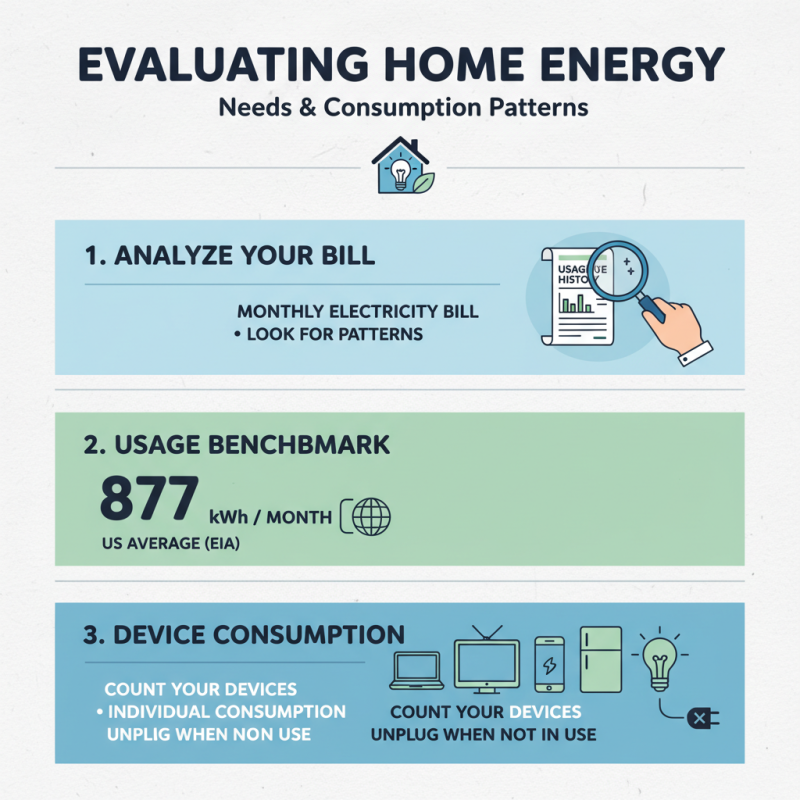
When evaluating your home's energy needs, start by analyzing your monthly electricity bill. Look for patterns in usage. Many households consume about 877 kWh per month, according to the U.S. Energy Information Administration. This is a useful benchmark. Consider how many devices you have and their individual consumption.
Also, observe seasonal changes. Energy use typically spikes during summer and winter. This is crucial for sizing your solar panel system. If you usually use more power in these seasons, your system needs to accommodate that. Awareness of these patterns can guide an informed decision.
**Tip:** Track your energy usage with smart meters or apps. It helps pinpoint high-consumption devices in your home.
Next, think about battery storage. Evaluate how much energy storage you require. A standard home may need a battery with around 10-15 kWh capacity. This will help you maximize solar energy, especially during outages. Balancing size and cost is essential. An oversized battery may lead to inefficiencies.
**Tip:** Research battery technology options. Look for warranties and lifespan data to ensure long-term reliability. Each choice you make should reflect both your energy needs and financial situation.
Assessing Battery Storage Options for Home Solar Systems
When assessing battery storage options for home solar systems, it’s crucial to understand your energy needs. A typical household in the U.S. uses about 877 kWh per month. For many homeowners, this means considering batteries that can store at least a few days’ worth of energy. This is essential for homes that want to maintain power during outages.
The capacity of batteries is measured in kilowatt-hours (kWh). Most homeowners opt for batteries ranging from 10 kWh to 20 kWh. However, not all batteries are created equal. Some may degrade faster than others. According to a study from the National Renewable Energy Laboratory, up to 30% of battery performance can decrease over time. This shows the importance of selecting a reliable technology that suits your consumption rate.
**Tip:** Calculate your daily usage. This helps determine which storage capacity fits your lifestyle best.
Another factor is the battery's lifespan. Most lithium-ion batteries last about 10 to 15 years. However, some may lose efficiency quicker than expected. The average warranty promises around 70% capacity after a decade. You’ll want to verify this with manufacturers.
**Tip:** Research various battery chemistries and their longevity. Different chemistries impact both price and performance.
Always consider how your energy consumption might evolve in the future. Changes in family size, lifestyle, or energy prices will affect your needs. Misjudging your capacity can leave you with either underperformance or wasted investment.
How to Choose Solar Panels and Battery Storage for Your Home? - Assessing Battery Storage Options for Home Solar Systems
| Criteria |
Option 1 |
Option 2 |
Option 3 |
| Storage Capacity (kWh) |
10 |
15 |
20 |
| Expected Lifespan (years) |
10 |
15 |
20 |
| Round-trip Efficiency (%) |
90 |
92 |
95 |
| Cost ($) |
4,000 |
6,000 |
8,000 |
| Warranty Period (years) |
5 |
10 |
15 |
Comparing Solar Panel and Battery Brands: What to Look For
When selecting solar panels and battery storage, it's crucial to understand brand differences. Not all panels are created equal.
Efficiency rates typically range from 15% to 22%. Higher efficiency means more energy production in limited space.
Look for panels with a proven track record. Reports show that some brands maintain performance better over time.
Warranty length is another important factor. Most reputable solar panels come with warranties
between 25 to 30 years. However, some brands offer shorter coverage, which might reflect their reliability.
Battery systems also vary significantly. Look for those that provide at least 10 years of service life.
Lifespan affects long-term value.
Cost is a pivotal consideration. While it may be tempting to choose cheaper options, they often lead to unexpected expenses.
Inconsistent performance can translate to higher energy bills. Also, consider the installation process.
Complex installations can lead to additional fees. Compare energy outputs and efficiency ratings carefully.
Remember, choosing the right solar solution is an investment in the future.
Inadequate research could lead to regrets down the line.
Cost Analysis: Budgeting for Solar Panels and Battery Storage
When budgeting for solar panels and battery storage, understanding costs is crucial. Solar panel prices vary widely, depending on efficiency and type. Battery storage systems can also differ in cost. Installing both can be a substantial investment, yet they may save money in the long run.
Consider installation costs. Some companies charge more for labor and permits. Additional expenses may include roof repairs or structural assessments. It’s smart to factor in these potential surprises. Aim to get multiple quotes to ensure a fair price.
Think about financing options. Many homeowners use loans or leasing agreements. Both can ease the upfront burden, but they come with long-term obligations. Reflect on your energy needs; these factors influence the system size and, ultimately, your budget. Evaluate these choices carefully to avoid regrets later.
Cost Analysis of Solar Panels and Battery Storage