How to Choose the Best Solar Batteries for Your Home Energy Needs

As the global shift towards sustainable energy solutions gains momentum, more homeowners are considering the integration of solar power systems into their properties. A key component of these systems is the use of effective solar batteries for house applications. According to a report by the International Energy Agency (IEA), the adoption of solar energy is projected to triple by 2030, with energy storage solutions becoming increasingly vital in ensuring reliable power supply. Solar batteries not only enhance energy efficiency but also facilitate energy independence by storing excess sunlight for use during peak demand times or when the sun isn’t shining.

In recent years, advancements in battery technology have diversified the options available to homeowners. A study published by the U.S. Department of Energy highlights that the global market for solar batteries is anticipated to exceed $19 billion by 2025, reflecting a significant shift in consumer demand for more resilient and sustainable energy solutions. Understanding how to select the best solar batteries for house energy needs is instrumental for homeowners seeking to optimize their energy systems. This involves analyzing factors such as capacity, lifespan, warranty, and compatibility with existing solar setups, ultimately ensuring a smarter and more cost-effective investment in home energy management.
How to Choose the Best Solar Batteries for Your Home Energy Needs

Understanding Solar Battery Types: Lithium-ion vs. Lead-acid

How to Choose the Best Solar Batteries for Your Home Energy Needs

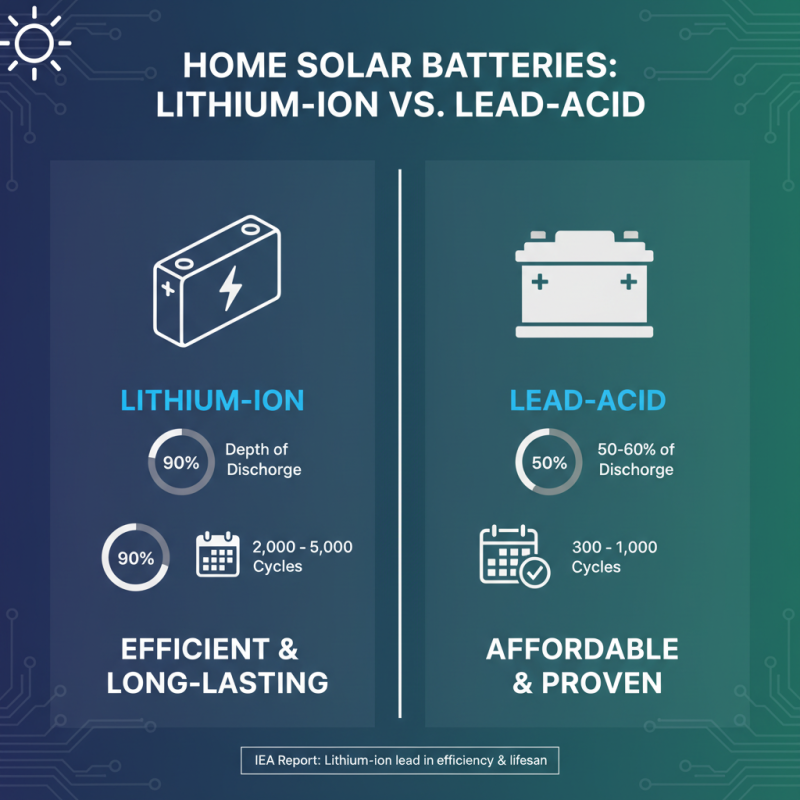
When selecting solar batteries for home energy storage, understanding the distinctions between lithium-ion and lead-acid batteries is crucial. Lithium-ion batteries are currently the most popular choice, offering remarkable efficiency and longevity. According to a report by the International Energy Agency (IEA), lithium-ion batteries have a cycle life exceeding 2,000 cycles, often reaching up to 5,000 cycles with proper management. They also maintain a high depth of discharge (DoD) of around 80-90%, meaning homeowners can utilize a larger percentage of the stored energy without significantly impacting the battery's lifespan.

In contrast, lead-acid batteries, while traditionally used in solar applications, are now considered less favorable for modern energy needs. These batteries typically have a shorter life span, averaging only 500-1,000 cycles, and a lower DoD of about 50-60%. A comparative analysis published by the National Renewable Energy Laboratory (NREL) indicates that, despite their lower upfront costs, lead-acid batteries can be less economical over time due to more frequent replacements and lower efficiency in energy use. As homeowners invest in solar technology, the trend increasingly favors lithium-ion solutions for sustainable, long-term energy storage.

Key Factors to Consider for Your Home Energy Needs and Battery Capacity

When choosing the best solar batteries for your home energy needs, understanding the key factors that influence battery capacity is essential. One of the primary considerations is the battery's energy capacity, which is often measured in kilowatt-hours (kWh). A typical household consumes around 30 kWh per day, according to the U.S. Energy Information Administration. Therefore, selecting a battery with sufficient capacity to meet this demand during peak usage times, especially during outages, is crucial.

Another important factor is the depth of discharge (DoD), which indicates how much of the battery's capacity can be used without damaging it. Most lithium-ion batteries offer a DoD of about 80-90%, meaning homeowners can utilize a significant portion of the battery's capacity efficiently.

Furthermore, battery lifespan, often measured in charge cycles, is a significant determinant of overall performance. Data from the National Renewable Energy Laboratory suggest that high-quality batteries can last 10 years or more, contributing to greater long-term savings and energy independence. Evaluating these factors comprehensively ensures that homeowners make informed decisions aligned with their energy needs and sustainability goals.

Evaluating Efficiency Ratings: What Do Cycle Life and Depth of Discharge Mean?

When choosing the best solar batteries for your home, understanding efficiency ratings is crucial. Two key terms that frequently arise are Cycle Life and Depth of Discharge (DoD). Cycle life refers to the number of complete charge and discharge cycles a battery can undergo before its capacity significantly diminishes. According to the National Renewable Energy Laboratory (NREL), batteries such as lithium-ion can typically boast a cycle life ranging from 2,000 to 10,000 cycles, depending on the chemistry and usage patterns. This means that a battery with a higher cycle life can provide long-term reliability, reducing the need for frequent replacements.

Depth of Discharge, on the other hand, indicates how much energy can be utilized from a battery relative to its total capacity. A higher DoD allows homeowners to use more of their battery's energy before recharging, ultimately maximizing efficiency. For instance, many modern lithium-ion batteries offer a DoD of around 80-90%, compared to lead-acid batteries that are usually limited to 50%. This fundamental difference not only influences the usable energy but also impacts the overall longevity of the energy storage system. By properly evaluating these metrics, homeowners can make informed decisions that align with their energy needs and sustainability goals.

How to Choose the Best Solar Batteries for Your Home Energy Needs - Evaluating Efficiency Ratings: What Do Cycle Life and Depth of Discharge Mean?

Battery Type Cycle Life (Cycles) Depth of Discharge (DoD) (%) Usable Capacity (kWh) Efficiency (%)
Lithium-ion 3000 80 10 95
Lead-acid (AGM) 1500 50 12 80
Lead-acid (Flooded) 1200 50 12 75
Flow Battery 4000 100 30 85
Nickel-based 2000 70 8 90

Comparing Costs: Initial Investment vs. Long-Term Savings on Solar Batteries

When considering solar batteries for residential energy needs, understanding the balance between initial investment and long-term savings is crucial. The upfront cost of solar battery systems can vary significantly. According to the Energy Storage Association, the average price of a solar battery installation can range from $5,000 to $15,000 depending on capacity and technology. However, as the technology evolves, prices have shown a declining trend over the years, making solar batteries more accessible than ever.

The potential long-term savings can offset this initial investment. Homeowners can save an average of 25-50% on their electricity bills by using stored solar energy during peak pricing hours, as reported by the National Renewable Energy Laboratory. Additionally, integrating battery storage can increase energy independence and resilience against power outages, enhancing their value. Furthermore, various states offer incentives and rebates, which can further ameliorate the initial financial burden, making solar battery systems a more feasible option for long-term energy savings.

Comparison of Initial Investment vs. Long-Term Savings on Solar Batteries

Assessing Brand Reliability: Analyzing Reputation and Warranty Options

When selecting solar batteries for home energy storage, assessing brand reliability is crucial. This involves understanding the manufacturer’s reputation and the warranty options they provide. According to a recent report from the Solar Energy Industries Association (SEIA), consumers should prioritize brands that have a proven track record in the solar industry, marked by positive customer reviews and robust post-sale service. Companies that have been active for several years with consistent product offerings typically build reliability through innovation, quality assurance, and strong customer support systems.

Moreover, warranty options can significantly impact a consumer's choice. Data from EnergySage suggests that a comprehensive warranty can range between 10 to 15 years, covering battery performance, capacity retention, and other essential aspects. A longer warranty often indicates a manufacturer's confidence in their product's longevity and reliability. It's advisable for homeowners to carefully read the fine print of warranty agreements, paying close attention to the terms related to potential defects and conditions that could void the coverage. Evaluating both reputation and warranty can help ensure that the selected battery system meets energy needs effectively, providing peace of mind in the investment.