How to Choose the Best Solar Backup Battery for Your Home?
Choosing the best solar backup battery for your home is crucial for energy independence. According to Dr. Emily Greene, a leading expert in renewable energy, “A reliable solar backup battery can transform how you utilize energy.” Homeowners now recognize the importance of such systems, especially during power outages.
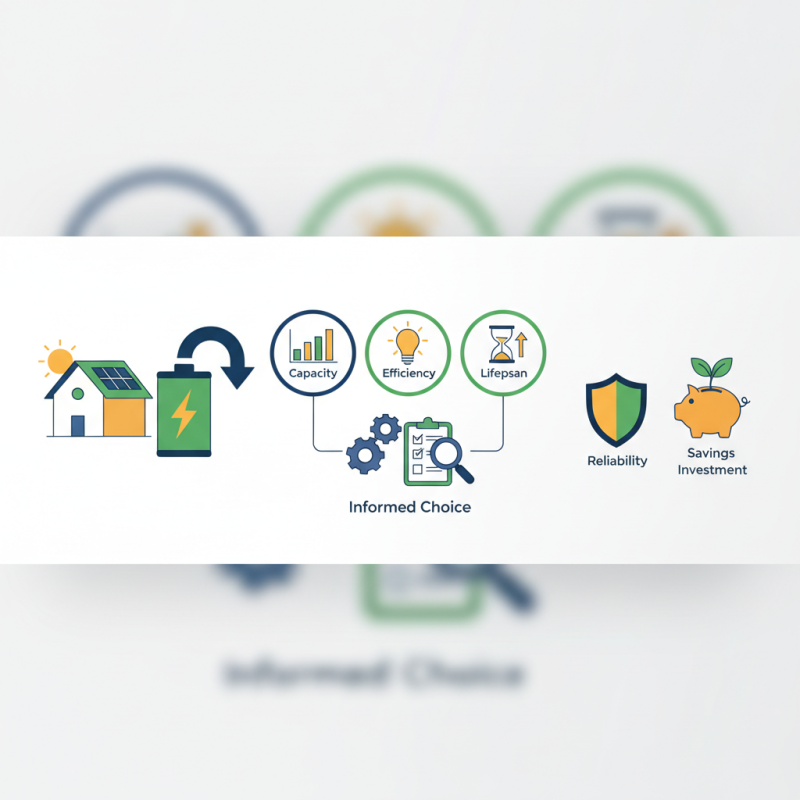
The market offers various options for solar backup batteries. These choices can be overwhelming. It's essential to consider capacity, efficiency, and lifespan when selecting the right product. Many features might stand out initially but require deeper evaluation. An informed choice can lead to substantial savings and backup reliability.
While some may trust brand popularity, personal research often reveals significant variations in performance. It’s wise to consult reviews and user experiences. Embracing renewable energy solutions should come with critical thinking. A solar backup battery can be an excellent long-term investment, if chosen wisely.
Understanding Solar Backup Batteries: Types and Technologies
Solar backup batteries play a crucial role in home energy systems. They store excess solar energy for use during outages or at night. Understanding their types and technologies helps homeowners make informed choices. Lithium-ion batteries are the most common type. They offer high energy density and faster charging. According to the U.S. Department of Energy, these batteries have an efficiency rate of about 90-95%. This means less energy is lost during storage.
Lead-acid batteries, another option, are more affordable but come with limitations. Their lifespan is shorter, often lasting 3-5 years compared to 10-15 years for lithium-ion. The National Renewable Energy Laboratory highlights that while lead-acid batteries are cheaper upfront, their overall cost-effectiveness drops when replaced frequently. It’s essential to weigh initial savings against long-term performance.
Understanding your energy needs is vital. A household that consumes 30 kWh daily will require a larger capacity than one that uses 15 kWh. Analyze your consumption patterns. It helps identify the most suitable backup solution. Consider future energy needs, too. As homes adopt more electric appliances, existing battery choices may soon feel inadequate. Exploring options should not be rushed. Each choice comes with trade-offs.
Key Factors to Consider When Choosing a Solar Backup Battery
When selecting a solar backup battery for your home, consider the capacity and energy needs. How much energy do you typically consume? Match the battery capacity to your home’s requirements. A larger battery may cover more energy needs but could be more expensive.
Tips: Evaluate your daily energy use. Make note of how much power appliances require. This will help you pick the right size.
Another factor is the battery's lifespan. Lifespan varies significantly among models. A battery with a longer lifespan may provide better value, despite potentially higher upfront costs. Be cautious about warranties; check their terms for clarity.
Tips: Look for customer reviews about battery performance. They often reveal real-life perspectives on longevity and efficiency.
Lastly, consider the efficiency rating. This shows how much energy from the solar panels the battery can store. Higher efficiency means less energy is wasted. Yet, be mindful; a very high efficiency might drive costs up.
Tips: Compare efficiency ratings within your budget. This will help balance quality and price effectively. Make informed choices based on your research.
How to Choose the Best Solar Backup Battery for Your Home? - Key Factors to Consider When Choosing a Solar Backup Battery
| Factor |
Description |
Importance Level |
| Capacity |
The total amount of energy the battery can store, typically measured in kilowatt-hours (kWh). |
High |
| Depth of Discharge (DoD) |
The percentage of the battery that can be used without damaging it; higher percentages indicate better performance. |
High |
| Lifespan |
The duration the battery can last before it needs replacement, often measured in charge cycles. |
Medium |
| Efficiency |
How much of the stored energy can be used effectively, with higher percentages being more advantageous. |
High |
| Temperature Range |
The operating temperatures at which the battery performs optimally; crucial for climates with extreme weather. |
Medium |
| Safety Features |
Includes protections against overheating, short-circuits, and overcharging to prevent hazards. |
High |
Evaluating Capacity and Power Ratings: What You Need to Know
When selecting a solar backup battery, capacity and power ratings are critical factors. Capacity indicates how much energy the battery can store. It is measured in kilowatt-hours (kWh). A battery with a higher kWh rating can supply more energy for longer periods. For instance, a 10 kWh battery can power essential devices for several hours during an outage. However, be cautious; larger capacity often means higher costs and potential energy waste if not used efficiently.
Power ratings, generally expressed in watts (W), determine how much energy the battery can deliver at once. This is crucial for running appliances that require high bursts of power. A battery rated at 5,000 watts may power heavy equipment, like refrigerators or air conditioning units. It's essential to balance capacity and power ratings based on your household needs. The National Renewable Energy Laboratory suggests that many consumers underestimate peak power requirements, which can lead to inadequate battery performance.
Assessing both metrics can feel overwhelming. You'll need to analyze your energy usage patterns. There is value in comparing potential battery systems. Some batteries may excel in storage but fall short in output. Research shows that approximately 30% of battery installations fail to meet user expectations due to improper sizing. With careful evaluation, homeowners can avoid common pitfalls and make informed decisions that match their solar setup and usage demands.
Analyzing Lifespan and Warranty Options for Longevity
When choosing a solar backup battery, lifespan and warranty options are crucial. A well-known industry report indicates that most lithium-ion batteries last between 5 to 15 years. This variability often depends on usage patterns and environmental conditions. Understanding these factors can help homeowners make informed decisions. A shorter lifespan may lead to frequent replacements. This, in turn, can increase long-term costs.
Warranties vary widely across the industry. Some companies offer coverage for just a few years, while others extend it up to 25 years. A longer warranty can indicate confidence in the product's durability. However, reading the fine print is essential. Many warranties come with stipulations that could invalidate coverage. Not all users realize this and face unexpected costs.
The depth of warranty might reflect the battery's anticipated performance. For example, warranties often cover specific cycles. If a battery is expected to deliver 80% capacity after a set number of cycles, it's crucial to align this with your energy needs. Many homeowners overlook this detail, risking underperformance. Balancing lifespan and warranty details can lead to a more sustainable and cost-effective solar storage solution.
Cost-Benefit Analysis: Investment vs. Long-term Savings in Solar Solutions
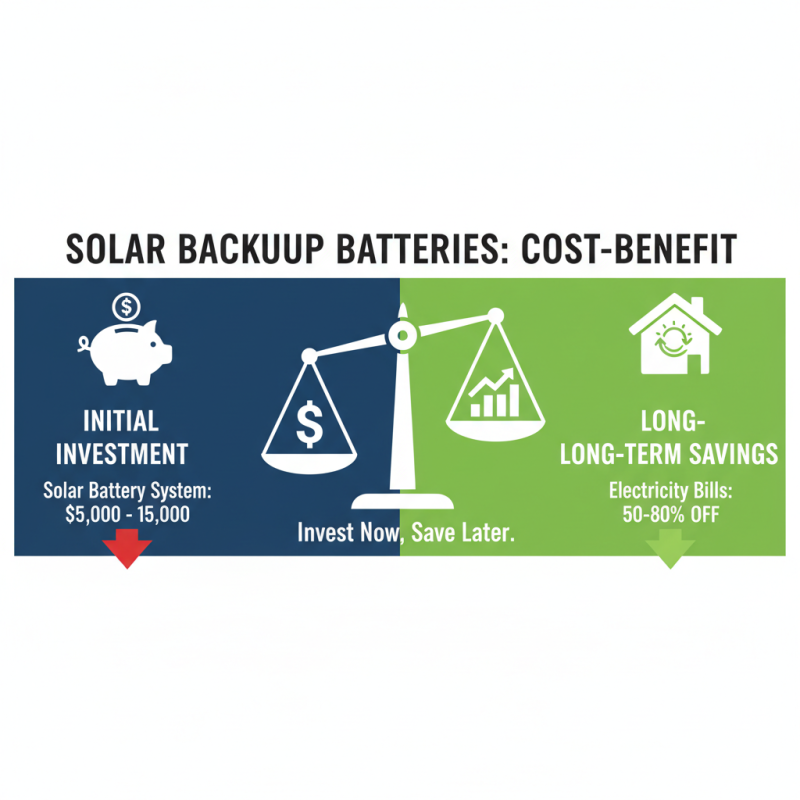
When considering solar backup batteries, a cost-benefit analysis is essential. Initially, the investment can seem daunting. The average cost of a solar battery system can range from $5,000 to $15,000. However, the long-term savings can be significant. A well-installed system can save homeowners approximately 50-80% on their electricity bills.
Tips: Assess your energy needs thoroughly. Calculate how much power you use monthly. This helps in choosing the capacity of your battery.
It's crucial to consider the lifespan of the battery too. Most quality solar batteries last around 10 to 15 years. The average return on investment typically becomes evident after about 7-10 years. This means you’ll have several years of savings ahead. The installation costs can sometimes overshadow expected savings, necessitating a careful reflection on budget allocations.
Tips: Research local incentives. Many regions offer tax credits or rebates for solar installations, enhancing long-term savings.
Investing in a solar backup battery may require a cautious approach. Weigh your financial situation and energy needs. Although it presents a significant upfront cost, the potential for lower utility bills and energy independence cannot be ignored.